
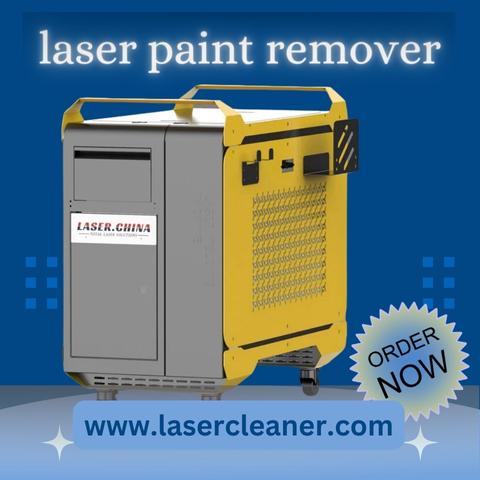
Laser paint remover systems have transformed the way industries approach surface cleaning and paint removal. These systems utilize concentrated laser beams to precisely remove coatings from surfaces without causing damage to the underlying material. Unlike traditional chemical or mechanical methods, laser paint removal provides an advanced, non-contact process that can be applied to a wide range of surfaces, including metals, plastics, composites, and delicate historical materials.
In industrial settings, laser paint removers have become essential tools for preparing surfaces for repainting or refinishing. Industries such as automotive, aerospace, and heavy machinery rely on laser systems for the consistent and accurate removal of coatings, including paint, varnish, lacquer, and industrial coatings. The precision of laser technology ensures that operators can target only the material that needs to be removed, which minimizes waste and reduces the risk of damaging sensitive components.
Laser paint remover systems work by directing a focused laser beam at the surface, which rapidly heats and breaks down the paint layer. The paint material vaporizes or peels away due to thermal stress, leaving the substrate clean and ready for further processing. This process can be controlled with high accuracy, allowing operators to adjust the intensity, pulse duration, and scanning pattern based on the type of paint, surface material, and thickness of the coating. The non-abrasive nature of laser cleaning also makes it suitable for surfaces that require extreme care, such as historical artifacts, sculptures, or aircraft components.
Automotive repair and restoration industries have found laser paint removers particularly valuable. These systems allow for precise paint stripping without affecting the metal body panels or composite materials. They are also used in preparation for specialized coatings, such as powder coating or advanced protective films. Automotive body shops that adopt laser paint removal technology benefit from faster turnaround times and cleaner surfaces, which contribute to improved adhesion of new coatings.
In aerospace applications, where surface integrity and precision are critical, laser paint removers provide a solution that ensures safety and compliance with stringent standards. Removing paint from aircraft components without mechanical abrasion helps maintain the structural integrity of metal or composite surfaces. Additionally, laser systems can reach complex geometries, recessed areas, and hard-to-access surfaces, which are challenging for traditional stripping methods.
Industrial machinery maintenance also benefits from laser paint removal. Heavy equipment, including engines, turbines, and metal frameworks, often require regular paint stripping for refurbishment or recoating. Laser systems can clean machinery components efficiently while minimizing downtime, providing a cost-effective and time-saving alternative to labor-intensive methods. Moreover, laser cleaning eliminates the need for hazardous chemicals, reducing environmental impact and safety risks for operators.
Laser paint removers are highly adaptable to different scales of operation. Portable handheld laser systems are ideal for on-site maintenance, small-scale restoration, or delicate surface work. In contrast, high-power industrial laser systems are suitable for large-scale operations, such as mass production paint stripping, automotive fleet maintenance, or shipyard surface preparation. The flexibility of laser technology allows businesses to implement solutions tailored to their operational requirements and production volumes.
Another critical application of laser paint removal is in historical restoration and art conservation. Museums, heritage sites, and restoration workshops use laser systems to remove aged or discolored paint layers from statues, architectural elements, and antique machinery. The precision of lasers ensures that only unwanted coatings are removed, preserving the underlying material and its historical value. The non-contact process reduces the risk of micro-abrasions, scratches, or chemical reactions that could harm delicate surfaces.
Laser paint removers are designed with advanced control systems that allow operators to program scanning patterns, laser intensity, and speed. Automation can be integrated with robotic arms for repetitive tasks, improving efficiency and consistency across large production batches. Laser scanning systems with real-time monitoring can adjust parameters dynamically, ensuring optimal cleaning results even when dealing with surfaces that have variable coating thicknesses or uneven geometries.
The adoption of laser paint remover technology also aligns with sustainability and environmental responsibility initiatives. By eliminating the need for chemical solvents and abrasive blasting, laser systems reduce waste and minimize the release of hazardous substances. Operators benefit from a cleaner work environment, lower disposal costs, and compliance with environmental regulations. The energy efficiency of modern laser systems further enhances their role as environmentally conscious solutions in surface preparation and maintenance processes.
In addition to surface cleaning, laser paint removers can also be applied in industries requiring precision layer removal. Electronics manufacturing, for example, uses laser technology to remove coatings on printed circuit boards or delicate components without damaging conductive layers. Similarly, in medical device production, lasers can remove protective coatings or residues from metal and polymer parts while maintaining strict tolerance requirements.
Training and skill development are essential for maximizing the efficiency and safety of laser paint removal. Operators need to understand laser-material interaction, surface characteristics, and appropriate safety protocols. Most modern laser systems are equipped with user-friendly interfaces, safety interlocks, and protective housings to minimize operator risk, while still allowing full control over cleaning parameters.
The versatility of laser paint removers extends to research and development settings, where surface analysis or coating studies require precise removal of thin layers. Engineers and scientists can use lasers to study substrate properties, test adhesion quality, or investigate coating performance without introducing mechanical or chemical interference. This precision makes laser technology a valuable tool for innovation and quality control across multiple industries.
Overall, laser paint remover technology represents a major evolution in surface treatment and paint stripping applications. Its precision, adaptability, and environmentally friendly operation make it suitable for a wide range of industries, including automotive, aerospace, industrial manufacturing, restoration, and scientific research. With ongoing advancements in laser power, automation, and control systems, the applications of laser paint removal are expanding, enabling faster, cleaner, and safer surface preparation methods for both modern industrial and delicate restoration projects.

 Arabic
 French
 Spanish
 Portuguese
 Deutsch
 Turkish
 Dutch
Dutch
 Italiano
 Russian
 Romaian
 Portuguese (Brazil)
 Greek
Greek