
Statistics can feel confusing fast. One small number can change how a whole study gets read. The p-value is one of those numbers. People quote it all the time, but many don’t fully get what it’s saying.
If you use z-tests in research, school, business, or data work, you need to understand p-values the right way. Not the shortcut version. Not the myth-filled version. The real one.
This guide breaks it down in plain language. You’ll learn what a p-value is, how it works in a z-test, how to read it, and where people mess it up. No fluff. Just clear answers you can trust.
What Is a Z-Test?
A z-test is a statistical test. You use it to compare a sample to a known population value.
Most z-tests answer one basic question. Is this difference real, or could it happen by random chance?
You usually use a z-test when:
-
Your sample size is large, often over 30
-
The population standard deviation is known
-
Your data follows a normal shape, or close enough
Z-tests show up in many places. Quality control. Medical studies. A/B testing. Surveys. Any time you want to compare a sample mean or proportion to a known value, a z-test may fit.
What Is a P-Value?
The p-value tells you how surprising your data is if the null hypothesis were true.
That’s the cleanest way to say it.
In simple terms, it answers this question:
“If there were no real effect, how likely is it that I’d see results like this?”
A small p-value means your result would be rare if nothing were going on. A large p-value means your result is pretty normal under random chance.
That’s it. No magic. No hidden meaning.
The Null Hypothesis Explained
Before you run a z-test, you start with a claim called the null hypothesis.
The null hypothesis says there is no difference. No effect. No change.
Examples:
-
The average height is 170 cm
-
The defect rate is 2 percent
-
The conversion rate did not change
Your test checks whether your data gives strong reason to doubt that claim.
You don’t prove the null wrong. You check whether your data fits well with it.
How P-Values Work in Z-Tests
A z-test converts your data into a z-score.
The z-score tells you how far your result is from the expected value, measured in standard deviations.
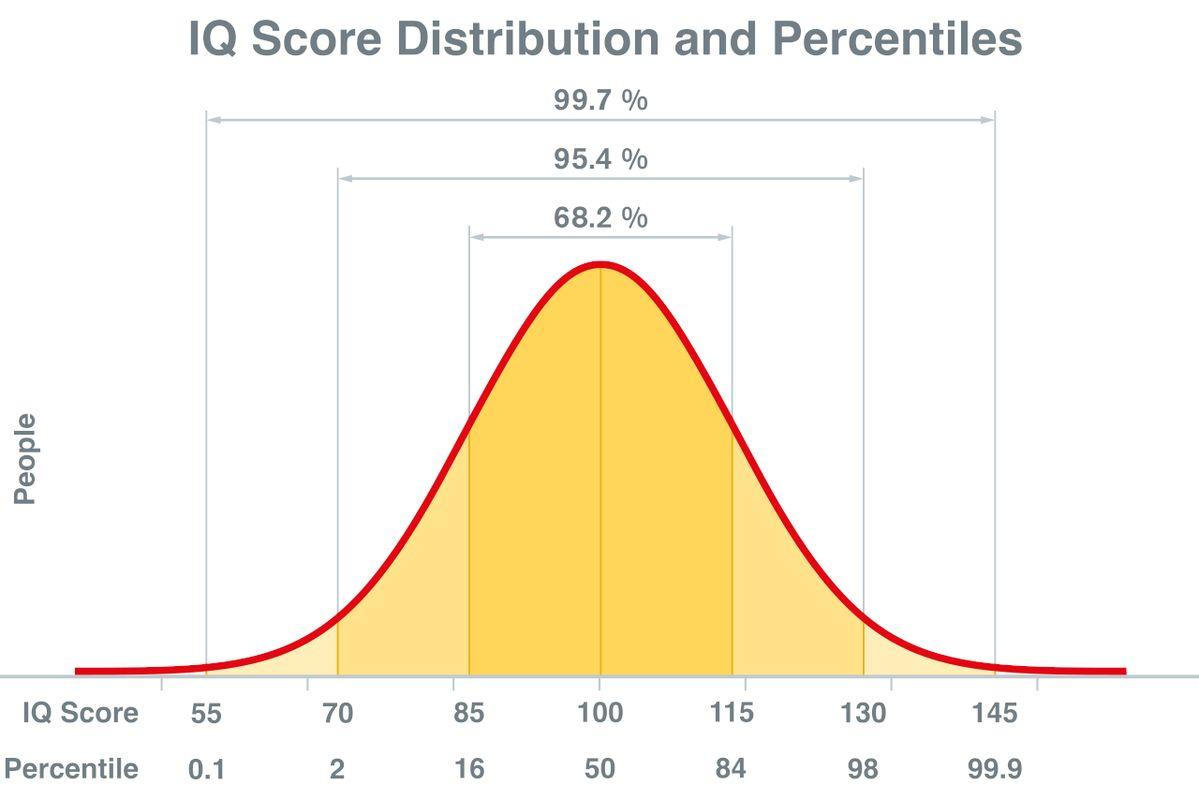
Once you have the z-score, the p-value comes from the normal distribution curve.
Here’s the flow:
-
Set up the null hypothesis
-
Collect sample data
-
Calculate the z-score
-
Find the p-value tied to that z-score
-
Decide whether the result is surprising enough
The p-value links your data to probability. It shows where your result sits on the curve.
One-Tailed vs Two-Tailed Tests
This part matters more than many people think.
A one-tailed test checks for a difference in one direction only.
Examples:
-
Is the mean greater than 50?
-
Did sales increase?
A two-tailed test checks both directions.
Examples:
-
Is the mean different from 50?
-
Did sales change at all?
Two-tailed tests split the probability across both ends of the curve. That makes the p-value harder to reach.
Choose this before you look at data. Changing it after is bad practice.
Common P-Value Thresholds
Most studies use 0.05 as the cutoff.
If the p-value is less than or equal to 0.05, the result is called statistically significant.
If it’s higher than 0.05, it’s not.
Why 0.05? Tradition. Not science law.
Some fields use 0.01. Others use 0.10. What matters is setting the rule ahead of time and sticking to it.
What a P-Value Does Not Tell You
This is where many people go wrong.
A p-value does not tell you:
-
The size of the effect
-
How important the result is
-
The chance the null hypothesis is true
-
Whether your study is well designed
A tiny p-value can come from a tiny effect if the sample is huge. A big effect can miss significance if the sample is small.
Context always matters.
A Step-by-Step Example
Let’s make this real.
Say a factory claims the average bottle fill is 500 ml. You take a sample of 40 bottles.
Your sample mean is 497 ml. The population standard deviation is known to be 5 ml.
Step 1: Set the null hypothesis
The mean fill is 500 ml.
Step 2: Calculate the z-score
Z equals (497 minus 500) divided by (5 divided by square root of 40).
That gives a z-score around -3.79.
Step 3: Find the p-value
A z-score of -3.79 is far out on the curve.
The p-value is very small, well below 0.01.
Step 4: Interpret
This result would be very rare if the true mean were 500 ml.
You have strong reason to question the claim.
Using Z-Test Calculators
Most people don’t calculate z-scores by hand. That’s fine.
Tools speed things up and reduce math mistakes. Just make sure you know what the output means.
An Online Z test calculator can give you the z-score and p-value in seconds. It won’t tell you how to think about the result. That part is on you.
Always check your inputs. Wrong values lead to wrong conclusions.
Practical Uses of P-Values in Z-Tests
P-values guide decisions in real work.
In healthcare, they help test new treatments.
In marketing, they help compare campaigns.
In manufacturing, they flag quality issues.
In education, they test program outcomes.
The math stays the same. The stakes change.
The best researchers treat p-values as one piece of evidence, not the final word.
Effect Size Matters Too
Let’s say two studies both report p-values below 0.05.
One shows a change of 0.2 percent. The other shows a change of 20 percent.
Same p-value. Very different meaning.
Effect size tells you how big the difference is. Confidence intervals show how precise your estimate is.
Good research reports all of it, not just the p-value.
Sample Size and P-Values
Sample size has a huge impact.
Large samples make it easier to get small p-values. Small samples make it harder.
This can fool people into thinking a result is more meaningful than it is.
Always ask: How big was the sample? Was it planned ahead of time?
Common Mistakes People Make
Here are errors you’ll see again and again.
-
Treating p less than 0.05 as proof
-
Ignoring study design flaws
-
Switching between one-tailed and two-tailed tests
-
Running many tests and reporting only the ones that worked
-
Forgetting practical meaning
Avoid these and your work gets stronger fast.
P-Values and Real-World Decisions
In the real world, decisions rarely hinge on one number.
A p-value can help answer, “Is this result likely due to chance?”
It cannot answer, “Should we act?”
That depends on cost, risk, ethics, and goals. Statistics inform judgment. They don’t replace it.
How to Explain P-Values to Others
When you share results, keep it simple.
Don’t say, “The null hypothesis was rejected.”
Say, “This result would be rare if there were no real difference.”
People understand that. Clarity builds trust.
FAQs About P-Values in Z-Tests
What does a p-value of 0.03 mean?
It means there’s a 3 percent chance of seeing results this extreme if the null hypothesis were true.
Is a lower p-value always better?
No. Lower just means more surprising under the null. It doesn’t mean more useful or more important.
Can a result with p greater than 0.05 still matter?
Yes. It may point to a real effect that needs more data or better design.
Should I always use 0.05 as the cutoff?
No. Choose a level that fits your field and risk tolerance.
Are p-values enough on their own?
No. Pair them with effect sizes, confidence intervals, and good judgment.
Final Thoughts
P-values in z-tests aren’t hard once you strip away the myths. They measure surprise, not truth. They help you judge evidence, not replace thinking.
If you use them with care, they can sharpen your research and your decisions. If you lean on them too hard, they can mislead.
Stay curious. Ask good questions. Use the numbers wisely.

 Arabic
 French
 Spanish
 Portuguese
 Deutsch
 Turkish
 Dutch
Dutch
 Italiano
 Russian
 Romaian
 Portuguese (Brazil)
 Greek
Greek