
You notice a musty smell in the basement. A dark, speckled pattern creeps along the bathroom ceiling. A patch of wall behind the sofa feels damp and looks stained. The word that comes to mind is unsettling: mold. Your instinct might be to grab a bottle of bleach and a scrub brush, but a deeper anxiety lingers. Is it safe? Will it come back? Is there more I can’t see?
Mold is more than a cosmetic issue; it’s a symptom of a moisture problem and a potential health hazard. DIY attempts often address only the visible tip of the iceberg, leaving the root cause and hidden colonies untouched, allowing the problem to resurface. This is where professional mold remediation comes in. It’s not just cleaning; it’s a comprehensive, scientific process designed to remove mold contamination safely, address the source of moisture, and restore your indoor environment to a healthy state. This guide walks you through what a legitimate, professional remediation entails, step-by-step, so you understand the investment in your home’s health and your family’s well-being.
The Core Principle: Remediation vs. Removal
First, let's clarify the term. "Mold removal" is a misnomer. Microscopic mold spores exist naturally in indoor and outdoor air; you cannot eliminate them all. The goal of mold remediation is to bring the mold level back to a natural, normal, and safe concentration for your indoor environment. This involves physically removing mold colonies and contaminated materials, cleaning the air, and fixing the water problem that allowed it to grow.
The Professional Protocol: A Step-by-Step Breakdown
Certified mold remediators follow strict guidelines, often based on standards from the IICRC (Institute of Inspection, Cleaning and Restoration Certification) and EPA protocols. Here’s what a thorough process looks like.
Step 1: Inspection and Assessment (The Diagnosis)
A professional doesn’t start cleaning; they start investigating.
- Visual Inspection: A trained specialist will examine the visible signs, often using bright lights and tools to look behind walls, under floors, and in attic spaces. They understand common trouble spots: behind toilets, under sinks, around window seals, in crawl spaces, and on basement foundations.
- Moisture Mapping: Using moisture meters and thermal imaging cameras, they detect hidden moisture within walls, ceilings, and subfloors. Finding and fixing this moisture source is the single most important part of the job. No remediation will succeed without it.
- Sampling (When Needed): While not always required for a visible infestation, air or surface sampling may be recommended to identify the mold type (especially if toxigenic types like Stachybotrys, or "black mold," are suspected) or to establish a baseline for post-remediation verification. A legitimate company will explain why sampling is or isn’t needed.
Step 2: Containment and Air Filtration (Preventing Cross-Contamination)
This is what separates professionals from DIY efforts. To prevent mold spores from spreading to clean areas of your home during the work, they establish engineering controls.
- Physical Containment: They will seal off the work area with heavy-duty plastic sheeting, creating a negative air pressure chamber. All gaps, doorways, and vents are taped shut.
- Negative Air Pressure: A HEPA-filtered air scrubber is placed inside the containment zone and exhausts filtered air outside the home (or into another contained area). This creates negative pressure, meaning air constantly flows into the containment zone, trapping spores inside.
- Decontamination Chamber: A small, sealed area (an "airlock") may be built at the entry to the containment zone. Workers suit up here and clean tools upon exit.
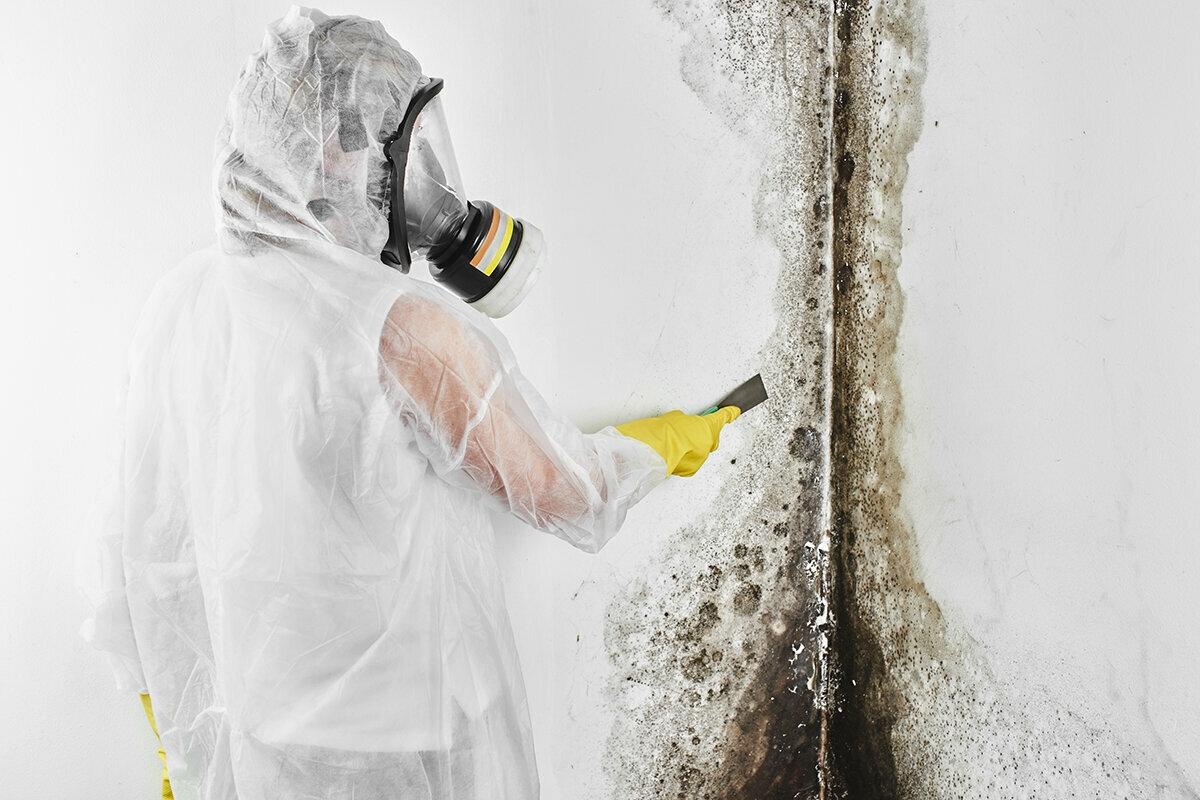
Step 3: Personal Protective Equipment (PPE) – Safety First
The crew will wear appropriate PPE, which typically includes:
- N95 or P100 Respirators to prevent inhalation of spores.
- Disposable Full-Body Suits to prevent spores from clinging to clothing.
- Gloves and Goggles.
This protects both the workers and your family by ensuring no contaminants are carried out of the work area.
Step 4: Removal and Cleaning of Contaminated Materials
How mold is addressed depends on the surface it’s on.
- Porous Materials (Drywall, Insulation, Carpet, Unfinished Wood): These materials are like sponges; mold grows roots (hyphae) deep within them. They cannot be adequately cleaned. Professionals will safely bag and dispose of these materials following local regulations. This is the "demolition" phase you may see—removing sections of wall, ceiling, or flooring.
- Semi-Porous and Non-Porous Materials (Studs, Concrete, Glass, Metal, Hard Plastic): These surfaces can often be cleaned. Technicians will use HEPA vacuuming to remove all loose spores from the surface, followed by scrubbing with EPA-approved antimicrobial cleaners. In some cases, abrasive methods like sanding or soda blasting may be used on structural wood, followed by a sealing agent (an antimicrobial encapsulant) to lock down any remaining microscopic residues and prevent future growth.
Step 5: Cleaning of Contents and Belongings
Furniture, clothing, and other items within the containment area will be evaluated.
- HEPA Vacuuming: All items are meticulously vacuumed with HEPA-filtered vacuums.
- Specialized Cleaning: Non-porous items are wiped down with antimicrobial solutions. Soft goods like curtains may be laundered or professionally cleaned. Companies often have partnerships with content restoration specialists for more delicate items.
Step 6: Post-Remediation Verification (The Clearance Test)
The job is not complete until it’s verified. After cleanup and removal are finished—but before reconstruction begins—a third-party post-remediation assessment is highly recommended.
- The Visual Inspection: An independent assessor (or a separate department within the company) inspects to ensure all contaminated materials are removed and the area is visibly clean and dry.
- Clearance Testing: The assessor will typically take air samples inside the containment area and compare them to a control sample from outside your home. The goal is to confirm that spore counts inside are now at or below normal outdoor levels and that the dominant mold types inside are the same as those naturally found outside. Passing this test is your scientific proof that the remediation was successful.
Step 7: Correcting the Moisture Source (The Final, Critical Step)
A professional remediation company will either perform this work or provide a detailed report specifying exactly what repairs are needed. This could be:
- Fixing a plumbing leak.
- Repairing a roof leak.
- Improving basement or crawl space drainage and waterproofing.
- Installing or repairing ventilation (e.g., in a bathroom or kitchen).
- Addressing HVAC system issues causing condensation.
Without this step, mold will almost certainly return.
The Benefits of a Professional, Step-by-Step Approach
Choosing a certified professional over a quick fix offers profound benefits:
- Health Protection: Safeguards your family from prolonged exposure to allergens and irritants that can trigger asthma, allergies, and other respiratory issues.
- Complete Solution: Addresses both the symptom (mold growth) and the disease (moisture problem), preventing recurrence.
- Property Preservation: Stops the progressive decay of wood, drywall, and other building materials, protecting the structural integrity and value of your home.
- Peace of Mind: Provides documented, verified proof that your home’s environment has been restored to a safe condition. You’re not left wondering if the job was done right.
How to Choose a Qualified Remediation Professional
Ask these questions:
- “Are you certified by the IICRC or another recognized body? Can I see your certifications?”
- “What is your step-by-step process for containment and preventing cross-contamination?”
- “Do you recommend post-remediation verification by a third party? Can you facilitate it?”
- “Will you provide a detailed scope of work and a written guarantee?”
- “Are you licensed and insured for mold remediation?”
Professional mold remediation is a systematic, safety-focused process rooted in building science. It transforms a frightening and unhealthy situation into a controlled, solvable project. By understanding these steps, you can become an informed partner in restoring your home, ensuring the work is done not just to look clean, but to be truly clean, safe, and lasting.

 English
 Arabic
 French
 Spanish
 Portuguese
 Deutsch
 Turkish
 Dutch
Dutch
 Russian
 Romaian
 Portuguese (Brazil)
 Greek
Greek