
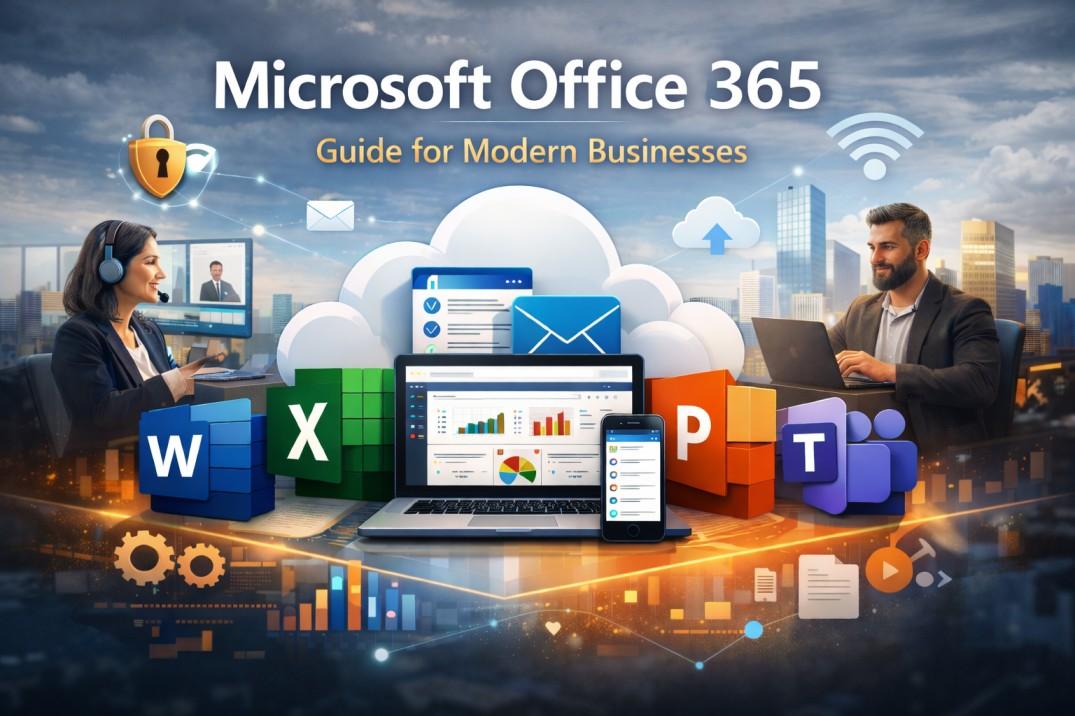
In today’s fast-paced digital world, businesses require flexible, secure, and scalable technology solutions. Microsoft Office 365 has become one of the most trusted cloud productivity platforms for organizations of all sizes. It combines essential business applications with powerful cloud services, enabling teams to work efficiently from anywhere.
Whether a company operates remotely, in-office, or in a hybrid model, cloud-based collaboration tools are now essential for maintaining productivity and competitiveness.
What Is Microsoft Office 365
Microsoft Office 365 is a cloud-based productivity suite that includes familiar applications such as Word, Excel, PowerPoint, and Outlook, along with cloud services like Exchange Online, SharePoint, OneDrive, and Teams.
Unlike traditional software that requires on-premise servers and manual updates, this platform operates in the cloud. This means businesses receive automatic updates, enhanced security, and seamless accessibility across devices.
Core Features and Applications
Microsoft Office 365 combines essential apps like Word, Excel, Outlook, and Teams with secure cloud services for email, storage, and collaboration. It enables real-time teamwork, seamless communication, and secure access across all devices.
Cloud-Based Email and Communication
Exchange Online provides secure and reliable email hosting with advanced spam filtering and data protection. Outlook integrates seamlessly with calendars, contacts, and scheduling tools, making communication more organized and professional.
Microsoft Teams serves as a unified platform where teams can communicate, share files, and collaborate efficiently in one place. It supports messaging, video conferencing, file sharing, and project coordination within a single platform.
Secure File Storage and Sharing
OneDrive and SharePoint enable businesses to securely store files in the cloud. Employees can access documents from any device, collaborate in real time, and maintain version control. This eliminates confusion caused by multiple file copies and outdated documents.
Productivity Applications
The suite includes industry-standard applications for document creation, data analysis, and presentations. Word enables professional documentation, Excel supports advanced data management, and PowerPoint simplifies impactful presentations. These tools are continuously updated to improve functionality and security.
Key Benefits for Businesses
Microsoft Office 365 improves productivity through real-time collaboration, secure cloud access, and streamlined communication. It also offers advanced security, scalability, and predictable monthly costs to support growing businesses.
Improved Collaboration
Cloud integration ensures teams can work together efficiently, even if they are in different locations. Real-time editing, instant messaging, and shared calendars streamline workflows and reduce communication gaps.
Enhanced Security
Cyber threats are increasing globally, making data protection a top priority. Microsoft Office 365 includes built-in security features such as multi-factor authentication, data encryption, advanced threat detection, and compliance management tools. These features help safeguard sensitive business information.
Scalability and Flexibility
As companies grow, their technology needs evolve. Businesses can easily add or remove users without investing in additional infrastructure. This flexibility makes the platform ideal for startups, mid-sized companies, and large enterprises.
Cost Predictability
Subscription-based pricing eliminates large upfront costs. Organizations benefit from predictable monthly expenses that include software updates, security patches, and cloud maintenance.
Supporting Remote and Hybrid Work
Remote work is no longer a temporary trend. Cloud productivity platforms allow employees to access files, emails, and meetings from any location. With secure login protocols and device management controls, businesses can maintain security without limiting flexibility.
The ability to collaborate in real time ensures projects move forward efficiently, regardless of team members’ physical locations.
Migration and Setup Considerations
Migrating from legacy systems to Microsoft Office 365 requires careful planning. Email migration, data transfer, and security configuration must be handled correctly to avoid downtime or data loss.
Organizations should assess current infrastructure, determine licensing needs, and implement proper security policies during setup. Professional IT guidance can help streamline the transition and ensure long-term performance.
Choosing the Right Plan
Different business plans offer varying levels of storage, security, and compliance features. Smaller organizations may need basic business plans, while larger enterprises may require advanced compliance and analytics capabilities.
Selecting the right plan depends on employee count, regulatory requirements, and operational complexity. Evaluating long-term business goals is essential before making a decision.
Frequently Asked Questions
What does Microsoft Office 365 include?
It includes productivity applications like Word, Excel, and PowerPoint, along with cloud services such as email hosting, file storage, collaboration tools, and security features.
Is it suitable for small businesses?
Yes. The platform is scalable and offers plans specifically designed for small and mid-sized businesses.
Is data stored securely in the cloud?
Yes. Advanced encryption, compliance tools, and threat protection mechanisms are built into the system to ensure data security.
Can employees access files on mobile devices?
Yes. Users can securely access emails, documents, and collaboration tools from smartphones, tablets, and laptops.
How long does migration typically take?
Migration timelines vary depending on company size and data volume. Smaller businesses may complete the process within days, while larger organizations may require more time.
Conclusion
Microsoft Office 365 provides businesses with a powerful, secure, and flexible cloud productivity environment. From enhanced collaboration and secure communication to scalable infrastructure and predictable costs, it supports modern organizational needs.
By implementing the right plan and ensuring proper configuration, companies can improve operational efficiency, strengthen data protection, and position themselves for long-term digital success.

 English
 Arabic
 French
 Spanish
 Portuguese
 Deutsch
 Turkish
 Dutch
Dutch
 Italiano
 Russian
 Romaian
 Portuguese (Brazil)