
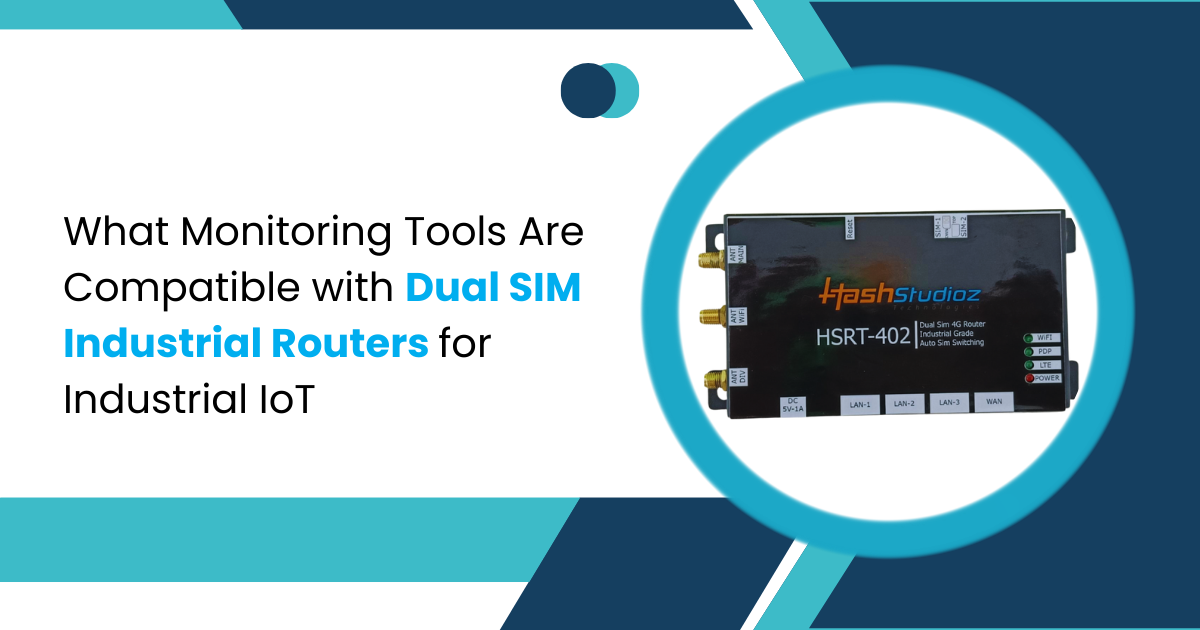
Industrial IoT (IIoT) relies heavily on reliable connectivity. Dual SIM Industrial Router devices are designed to provide redundant cellular connections, ensuring continuous network access even in remote or harsh industrial environments. Proper monitoring of these routers is essential to maintain uptime, detect faults early, and optimize network performance.
Why Monitoring is Critical for Industrial Routers
1. Prevents Production Loss in Factories
Industrial routers support critical factory operations. Any network downtime can halt production lines, causing significant financial loss. Continuous monitoring ensures network issues are detected early, keeping communication stable and processes running smoothly without unexpected interruptions.
2. Reduces Delays in Logistics and Transport Systems
Routers manage connectivity for automated logistics, warehouse systems, and transport networks. Monitoring ensures real-time data flows are uninterrupted, preventing delays in inventory management, shipment tracking, and fleet coordination, which is crucial for maintaining efficient supply chains.
3. Mitigates Safety Hazards in Remote Applications
Industrial routers often control remote monitoring systems in hazardous environments. Downtime or network failure can compromise safety, such as delayed emergency alerts or sensor data loss. Monitoring ensures connectivity is maintained, reducing risks to personnel and equipment.
4. Enhances Redundancy with Dual SIM Failover
Dual SIM industrial routers offer automatic failover between cellular networks. Without monitoring, failures in one network can go unnoticed, reducing redundancy benefits. Continuous monitoring verifies connectivity and switch-over functionality, ensuring seamless network operation during outages.
5. Provides Real-Time Performance Metrics
Monitoring tools track bandwidth usage, latency, signal strength, and other key metrics. Real-time visibility allows operators to detect anomalies immediately, optimize network performance, and maintain reliable communication for critical industrial systems.
Key Protocols Used in Monitoring Industrial Routers
Monitoring tools rely on standardized protocols and interfaces to collect router data. The most common include:
1. SNMP (Simple Network Management Protocol)
SNMP is widely supported in industrial routers. It allows monitoring systems to read key metrics, such as:
- Active network interfaces
- Cellular signal strength
- Data throughput
- CPU and memory usage
SNMP v3 adds security features, including authentication and encryption, making it suitable for industrial networks.
2. ICMP (Ping)
Ping tests provide basic network reachability checks. Monitoring tools use ICMP to detect whether a router is online or offline.
3. RESTful API
Modern industrial routers often expose REST APIs. These allow monitoring platforms to fetch real-time telemetry and status updates programmatically.
4. MQTT / OPC UA
Some industrial routers integrate with IIoT protocols like MQTT and OPC UA. This is useful when routers are part of a broader IoT network, enabling direct communication of device health and performance data.
Features to Look for in Monitoring Tools
When selecting a tool for Dual SIM Industrial Routers, consider the following:
- SIM Slot Monitoring: The tool should detect which SIM is active and monitor signal quality.
- Failover Alerts: It should alert when the router switches from one SIM to another.
- Bandwidth and Traffic Monitoring: Track data usage and performance trends.
- Device Health Metrics: Include CPU load, memory usage, and uptime.
- Historical Data: Maintain logs for analysis and preventive maintenance.
- Scalability: Support monitoring of hundreds or thousands of devices.
These features ensure that network administrators have complete visibility and control over the routers.
Recommended Monitoring Tools
Here is a breakdown of monitoring tools compatible with Dual SIM Industrial Routers:
1. PRTG Network Monitor
PRTG is a versatile network monitoring tool. It supports SNMP, ping, and API-based monitoring.
Benefits:
- Monitors each SIM slot separately
- Provides real-time traffic and latency metrics
- Sends alerts via email, SMS, or push notifications
Use Case:
A factory with multiple remote production lines can use PRTG to monitor hundreds of industrial routers, ensuring uninterrupted connectivity.
2. Zabbix
Zabbix is an open-source monitoring solution that supports SNMP, ICMP, and API protocols.
Benefits:
- Template-based monitoring simplifies configuration
- Tracks router performance and network quality
- Supports real-time alerts and historical trends
Use Case:
A water treatment facility uses Zabbix to monitor dual SIM routers controlling remote pumps, detecting signal drops before they affect operations.
3. ManageEngine OpManager
OpManager is designed for enterprise and industrial networks. It supports automated device discovery and real-time monitoring.
Benefits:
- Monitors active SIM, bandwidth, and interface status
- Custom dashboards display connectivity and traffic
- Supports threshold-based alerts for critical conditions
Use Case:
A logistics company monitors a fleet of trucks using OpManager to ensure routers switch SIMs without data loss during travel.
4. Manufacturer-Specific Platforms
Some router manufacturers provide dedicated monitoring platforms:
- Digi Remote Manager: Centralized monitoring of cellular routers with failover alerting
- Milesight DeviceHub: Remote monitoring and configuration for industrial routers
Benefits:
- Deep integration with hardware features
- Firmware updates over the air
- SIM-specific metrics and historical logs
Use Case:
A remote solar energy plant uses DeviceHub to monitor signal strength and switch SIMs automatically during network degradation.
5. Open-Source Alternatives
Open-source tools provide flexibility and cost savings:
- LibreNMS: Auto-discovery of devices, SNMP monitoring, and alerting
- MRTG: Traffic visualization and bandwidth monitoring
- NetXMS: Unified monitoring for routers, servers, and IoT devices
These tools can be paired with visualization software like Grafana to create dashboards for industrial networks.
Best Practices for Monitoring Dual SIM Industrial Routers
To maximize reliability and efficiency:
1. Enable SNMP and API Access
Ensure each router supports SNMP v3 or REST API. This provides secure monitoring and data collection.
2. Define Alerts and Thresholds
Set clear thresholds for:
- Signal strength
- Latency
- Packet loss
- Failover events
Timely alerts prevent prolonged network disruptions.
3. Monitor Both SIMs
Track both SIMs even if only one is active. This ensures awareness of the backup network’s status.
4. Use Historical Data
Maintain logs of network performance to detect recurring issues and plan preventive maintenance.
5. Scale Monitoring
Select a tool that can grow with your network. Large industrial deployments may have hundreds or thousands of routers.
Example Monitoring Scenario
Consider a remote mining operation with 150 sensors connected via Dual SIM Industrial Routers:
- All routers enable SNMP v3 and REST APIs.
- A central monitoring server collects data every 60 seconds.
- Dashboards display:
- Active SIM and failover events
- Signal strength for both networks
- Data throughput per router
- Alerts are sent for:
- Connectivity loss exceeding 2 minutes
- Signal strength below defined threshold
- Unexpected SIM switch
This setup allows engineers to intervene before network issues impact operations.
Statistics Supporting Router Monitoring
- Studies show proactive monitoring reduces network downtime by 40–50%.
- Companies using dual SIM failover with monitoring report 99.9% uptime in remote operations.
- Historical data analysis reduces incident response times by 30–45%.
These numbers highlight the value of monitoring tools in IIoT networks.
Conclusion
Monitoring is essential for Dual SIM Router deployments. Tools such as PRTG, Zabbix, ManageEngine OpManager, and manufacturer-specific platforms provide critical visibility into network health. Open-source alternatives also offer flexible solutions for industrial environments.
Key considerations include:
- Monitoring both SIMs for connectivity and signal quality
- Setting thresholds for alerts
- Collecting historical data
- Choosing scalable platforms
Effective monitoring ensures reliable connectivity, reduces downtime, and improves overall industrial IoT operations.

 English
 Arabic
 French
 Spanish
 Portuguese
 Deutsch
 Dutch
Dutch
 Italiano
 Russian
 Romaian
 Portuguese (Brazil)
 Greek
Greek