
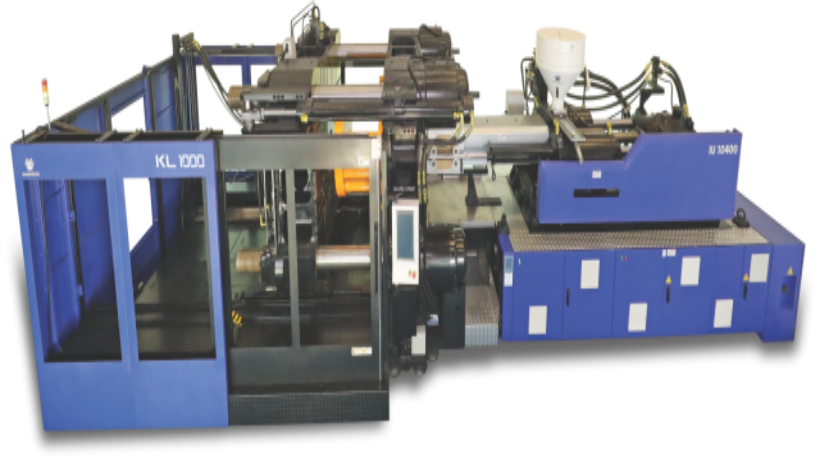
An Injection Moulding Machine is one of the most important technologies in modern manufacturing. From automotive components and medical devices to packaging materials and household goods, this machine plays a vital role in producing durable and precisely shaped plastic products at scale. Businesses across industries rely on injection moulding technology because it offers speed, consistency, and cost efficiency.
In this blog, we will explore how an injection moulding machine works, its main components, different types, benefits, and why it remains the backbone of plastic production worldwide.
What Is an Injection Moulding Machine?
An Injection Moulding Machine is a manufacturing system designed to produce plastic parts by injecting molten material into a custom-designed mould. Once the material cools and solidifies, the mould opens and releases the finished product. This process can be repeated thousands or even millions of times with high precision.
The machine is primarily used for thermoplastics, though certain thermosetting polymers and elastomers can also be processed. It is ideal for producing complex shapes with tight tolerances, making it suitable for industries where precision matters.
How Does an Injection Moulding Machine Work?
The working principle of an injection moulding machine involves four key stages:
1. Material Feeding
Plastic pellets are fed into a hopper located at the top of the machine. These pellets travel into a heated barrel.
2. Melting and Injection
Inside the barrel, a rotating screw heats and melts the plastic material. Once the required temperature and consistency are reached, the molten plastic is injected into a mould cavity under high pressure.
3. Cooling and Solidification
The mould is kept at a controlled temperature to allow the molten plastic to cool and solidify into the desired shape.
4. Ejection
After cooling, the mould opens, and ejector pins push the finished product out. The machine then resets for the next cycle.
This entire process happens within seconds to minutes, depending on the size and complexity of the product.
Main Components of an Injection Moulding Machine
An injection moulding machine consists of three major parts:
Injection Unit
This unit includes the hopper, barrel, heater bands, and screw mechanism. It is responsible for melting the plastic and injecting it into the mould.
Clamping Unit
The clamping system holds the mould tightly closed during injection. It must withstand high pressure to ensure that molten plastic does not leak out.
Mould
The mould is a custom-designed tool that determines the shape and size of the final product. Moulds can be single-cavity or multi-cavity, depending on production requirements.
Each component works together to deliver precise and repeatable results.
Types of Injection Moulding Machines
Manufacturers choose different types of injection moulding machines based on production needs, material type, and budget.
Hydraulic Injection Moulding Machine
This traditional type uses hydraulic systems to generate clamping force and injection pressure. It is known for durability and strong clamping capacity. These machines are suitable for large parts but may consume more energy.
Electric Injection Moulding Machine
Electric machines operate using servo motors instead of hydraulic systems. They offer high energy efficiency, faster cycle times, and better precision. They are ideal for cleanroom applications such as medical or electronic component manufacturing.
Hybrid Injection Moulding Machine
Hybrid machines combine hydraulic power with electric precision. They provide energy savings while maintaining strong clamping performance.
Each type offers specific advantages depending on industrial applications.
Applications of Injection Moulding Machines
An injection moulding machine is widely used across various industries:
-
Automotive Industry: Manufacturing dashboards, bumpers, interior trims, and connectors.
-
Medical Sector: Producing syringes, surgical tools, and laboratory equipment.
-
Packaging Industry: Creating caps, containers, and thin-wall packaging products.
-
Consumer Goods: Making toys, kitchenware, and electronic housings.
-
Industrial Equipment: Producing gears, fittings, and precision components.
Its ability to produce identical parts in large volumes makes it highly valuable for mass production.
Advantages of Using an Injection Moulding Machine
High Production Efficiency
Once the mould is designed, the machine can produce thousands of identical parts with minimal variation.
Excellent Precision
Injection moulding machines can create complex designs with tight tolerances and detailed features.
Reduced Material Waste
Excess plastic can often be recycled and reused, making the process more sustainable.
Cost-Effective for Large Volumes
Although initial mould costs can be high, the per-unit cost becomes very low during mass production.
Automation Compatibility
Modern machines can be integrated with robotic arms and automated systems to improve productivity and reduce labor costs.
Factors to Consider When Choosing an Injection Moulding Machine
Selecting the right injection moulding machine requires careful evaluation of several factors:
-
Clamping Force: Must match the size and pressure requirements of the mould.
-
Shot Size Capacity: Determines how much plastic can be injected in one cycle.
-
Material Compatibility: Different plastics require specific temperature and pressure settings.
-
Energy Efficiency: Electric and hybrid machines can reduce operating costs.
-
Production Volume: High-volume production demands faster cycle times and durable components.
Investing in the right machine ensures consistent product quality and long-term operational efficiency.
Maintenance Tips for Long-Term Performance
Regular maintenance is essential for keeping an injection moulding machine running smoothly.
-
Clean the barrel and screw regularly to prevent material contamination.
-
Inspect hydraulic systems for leaks and pressure stability.
-
Lubricate moving parts to reduce wear and tear.
-
Check electrical systems and temperature controls for accuracy.
-
Monitor mould alignment to avoid defects.
Preventive maintenance reduces downtime and extends machine lifespan.
Future Trends in Injection Moulding Technology
The injection moulding industry continues to evolve with advanced technologies. Smart machines equipped with IoT sensors now provide real-time monitoring and predictive maintenance. Energy-efficient servo systems are reducing operational costs. Additionally, the use of biodegradable and recycled plastics is supporting sustainable manufacturing practices.
Automation and data-driven manufacturing are transforming traditional production lines into highly efficient, intelligent systems.
Conclusion
An Injection Moulding Machine remains a cornerstone of modern manufacturing. Its ability to produce high-quality plastic components quickly and accurately makes it indispensable across industries. Whether used in automotive production, medical equipment manufacturing, or consumer goods fabrication, this machine delivers unmatched efficiency and precision.
By understanding its working principle, types, applications, and benefits, businesses can make informed decisions when investing in injection moulding technology. As innovation continues to shape the industry, injection moulding machines will remain essential for scalable, cost-effective, and sustainable plastic production.

 English
 Arabic
 French
 Portuguese
 Deutsch
 Turkish
 Dutch
Dutch
 Italiano
 Russian
 Romaian
 Portuguese (Brazil)
 Greek
Greek