
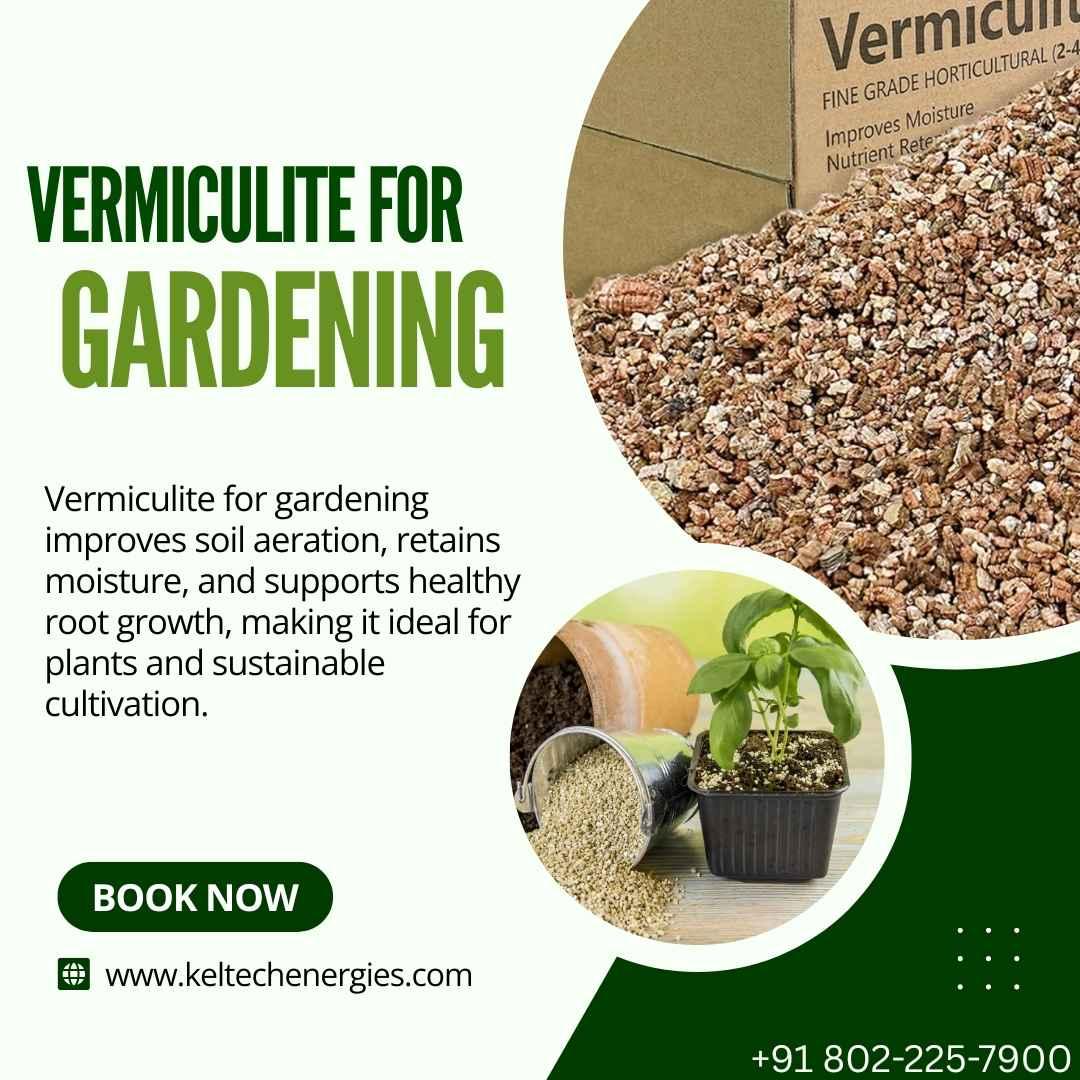
Healthy plants start below the surface. Gardeners often focus on fertilizers, sunlight, and watering schedules, but the growing medium quietly determines success or failure. Among soil amendments, vermiculite stands out for its ability to improve moisture balance, nutrient availability, and root health without complicating plant care.
This guide breaks down what vermiculite really does, how it supports strong plant growth, and how to use it correctly across different gardening applications.
What Exactly Is Vermiculite and Why Does It Matter?
Vermiculite is a naturally occurring mineral that expands when heated. This expansion creates lightweight, absorbent particles with a layered structure. Those layers trap water, air, and nutrients, releasing them gradually to plant roots.
Unlike many soil additives, vermiculite does not decompose, compact, or lose effectiveness over time. It remains stable in the growing medium, providing consistent performance season after season.
For gardeners aiming for predictable growth and reduced watering stress, vermiculite offers practical, measurable benefits.
How Does Vermiculite Improve Soil Performance?
Soil quality depends on three fundamentals. Moisture retention. Aeration. Nutrient availability. Vermiculite enhances all three at once.
Its sponge like structure holds water without waterlogging roots. At the same time, it maintains air pockets that allow oxygen to reach root systems. The mineral also binds nutrients such as potassium, magnesium, and calcium, releasing them slowly instead of letting them wash away.
This balanced environment supports steady growth and reduces common issues like root rot, drought stress, and nutrient deficiency.
Why Do Gardeners Choose Vermiculite Over Other Amendments?
Many soil conditioners address one problem while creating another. Vermiculite solves multiple challenges without tradeoffs.
Key advantages include:
• Excellent water retention
• Improved soil aeration
• Neutral pH compatibility
• Long lasting structure
• Lightweight handling
• Suitable for organic and conventional gardening
Because it is sterile and inert, vermiculite does not introduce weeds, pests, or pathogens into the soil. That reliability makes it ideal for controlled growing environments.
Is Vermiculite for Gardening Suitable for All Plants?
Vermiculite for Gardening works especially well for plants that prefer consistent moisture. Seedlings, leafy greens, herbs, and flowering plants benefit from its ability to prevent drying out between watering cycles.
It is also widely used in:
• Indoor plants
• Container gardening
• Raised beds
• Greenhouse cultivation
• Vegetable gardens
• Seed starting trays
Plants that thrive in moisture rich but well drained conditions respond particularly well to vermiculite based mixes.
How Does Vermiculite Support Strong Root Development?
Roots need air, water, and nutrients in balance. Too much water suffocates them. Too little causes stress. Compacted soil restricts growth.
Vermiculite creates a loose structure that allows roots to spread easily. Its layered particles gently hold moisture while maintaining airflow. This reduces transplant shock and encourages deeper, healthier root systems.
Stronger roots mean better nutrient uptake, improved disease resistance, and more vigorous top growth.
Can Vermiculite Be Used for Seed Starting?
Yes, and this is where vermiculite truly shines.
Seeds require even moisture and gentle support. Vermiculite provides both without crusting or compaction. When mixed with peat or coco coir, it creates an ideal germination medium.
Benefits for seed starting include:
• Faster and more uniform germination
• Reduced risk of damping off
• Easy root penetration
• Stable moisture levels
Many professional nurseries rely on vermiculite for consistent seedling performance.
How Should Vermiculite Be Mixed into Soil?
Correct ratios matter. Vermiculite works best as part of a blend, not as a standalone medium for mature plants.
Recommended mixing guidelines:
• Potting mixes: 20 to 30 percent
• Raised beds: 10 to 20 percent
• Seed starting mixes: up to 50 percent
• Clay soil improvement: 25 percent with organic matter
Always blend vermiculite evenly throughout the soil to avoid uneven moisture zones.
Does Vermiculite Help with Water Conservation?
Absolutely. Vermiculite significantly reduces water loss through evaporation and drainage. Its water holding capacity allows gardeners to water less frequently without stressing plants.
This is especially valuable in:
• Hot climates
• Indoor containers
• Hanging baskets
• Greenhouses
• Drought prone regions
Better moisture retention means more efficient water use and healthier plants with fewer fluctuations.
Is Vermiculite Safe for Organic Gardening?
Horticultural grade vermiculite is safe, sterile, and widely accepted in organic gardening systems. It contains no synthetic chemicals and does not break down into harmful byproducts.
When sourced responsibly and processed to horticultural standards, vermiculite poses no risk to plants, soil life, or gardeners.
Quality sourcing is critical. Trusted manufacturers like Keltech Energies focus on consistency, purity, and performance, ensuring reliable results across applications.
How Does Vermiculite Compare to Perlite?
This is a common question among gardeners choosing between soil additives.
Vermiculite holds more water and nutrients. Perlite improves drainage and aeration but retains less moisture.
Use vermiculite when:
• Plants need steady moisture
• Seed starting is the goal
• Water retention is a priority
Use perlite when:
• Drainage is critical
• Plants prefer drier conditions
Many premium potting mixes combine both for balanced performance.
Can Vermiculite Improve Nutrient Efficiency?
Yes. Vermiculite has a high cation exchange capacity. This means it holds positively charged nutrients and releases them gradually to plant roots.
Instead of nutrients leaching away during watering, they remain available longer. This improves fertilizer efficiency and reduces nutrient waste.
For gardeners, this translates into:
• Better growth with less fertilizer
• Reduced nutrient runoff
• More stable feeding cycles
What Role Does Vermiculite for Plants Play in Indoor Gardening?
Vermiculite for Plants is particularly valuable indoors, where overwatering is a common problem. Containers lack natural drainage pathways, making moisture management critical.
By holding water while maintaining airflow, vermiculite helps indoor plants stay hydrated without soggy roots. It also keeps potting mixes light, preventing compaction over time.
Houseplants, herbs, and decorative foliage benefit from this balanced environment.
Does Vermiculite Affect Soil pH?
Vermiculite is pH neutral. It does not alter soil acidity or alkalinity. This makes it compatible with a wide range of plants and growing systems.
Gardeners can adjust pH separately using lime or sulfur without worrying about vermiculite interfering with those corrections.
How Long Does Vermiculite Last in Soil?
One of vermiculite’s strongest advantages is longevity. Unlike organic matter, it does not decompose.
Once added, it continues to improve soil structure year after year. This makes it a cost effective investment for long term soil health.
Are There Common Mistakes When Using Vermiculite?
Yes. Most issues come from overuse or incorrect blending.
Avoid these mistakes:
• Using vermiculite alone for mature plants
• Overloading soil in already wet conditions
• Failing to mix evenly
• Using low grade or contaminated material
Balanced use ensures optimal results without water retention problems.
Is Vermiculite Right for Sustainable Gardening?
Vermiculite supports sustainable practices by improving water efficiency, reducing fertilizer loss, and extending soil performance.
Healthier soil means fewer inputs, lower maintenance, and more resilient plants. For gardeners focused on long term productivity and responsible resource use, vermiculite aligns perfectly with those goals.
Final Thoughts: Is Vermiculite Worth Adding to Your Garden?
Vermiculite is not a trend or shortcut. It is a proven soil amendment backed by decades of horticultural use. Its ability to regulate moisture, improve aeration, and enhance nutrient availability makes it a valuable tool for both beginners and professionals.
When used correctly, vermiculite supports healthier roots, stronger growth, and more predictable results across gardening applications.
Better soil creates better plants. Vermiculite helps you build that foundation with confidence.

 English
 Arabic
 French
 Spanish
 Portuguese
 Turkish
 Dutch
Dutch
 Italiano
 Russian
 Romaian
 Portuguese (Brazil)
 Greek
Greek