
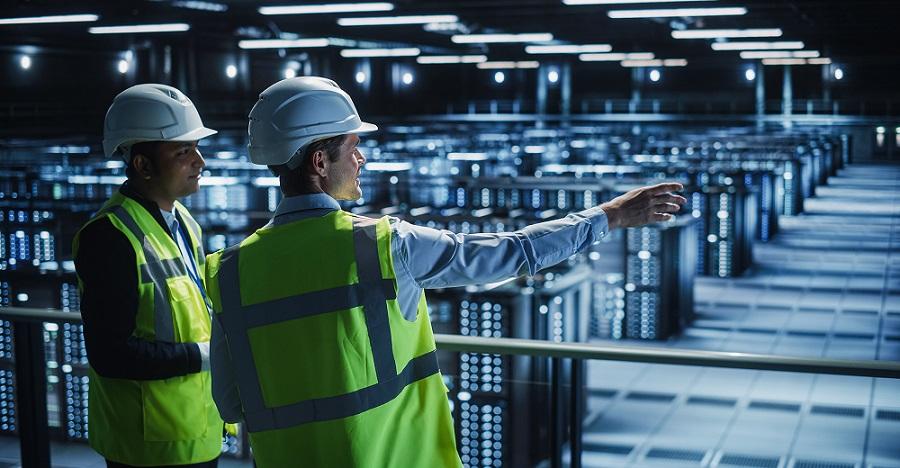
Modern Data Center Construction is driven by demand for cloud services, digital platforms, and AI workloads that require resilient, high-density facilities. Building a data center involves far more than a shell; it requires engineered power distribution, cooling systems, physical security, fire protection, and network connectivity. Owners and operators prioritize uptime, redundancy, and maintainability because outages can be financially and reputationally catastrophic. Construction programs must coordinate civil works, structural design, electrical systems, mechanical systems, and commissioning to strict performance requirements. Site selection is critical, balancing power availability, fiber routes, water access, natural hazard exposure, and permitting timelines. As rack densities rise, thermal management becomes more complex, pushing advanced cooling designs. Security and compliance requirements shape layouts and controls, especially for regulated tenants. Successful construction delivers predictable capacity that can scale in phases, supporting fast deployment without compromising reliability or safety.
Data center construction typically follows a lifecycle of planning, design, procurement, build, and commissioning. Early planning includes load forecasts, tier or redundancy targets, and modular expansion strategy. Design focuses on electrical single-line diagrams, UPS and generator architecture, cooling topology, and airflow management. Procurement is challenging due to long lead times for switchgear, transformers, chillers, and generators. Construction must coordinate multiple trades in tight schedules, often with parallel workstreams across shells, MEP, and network rooms. Commissioning is a defining step: systems are tested under load to verify redundancy, controls, and failover behavior. Documentation and as-builts are critical for operations and audits. Many projects use prefabricated components—skids, modular electrical rooms, and containerized solutions—to shorten schedules and improve quality. Quality control is essential because small installation defects can become major operational risks. Owners increasingly demand standardized designs across sites to reduce complexity and speed deployment. The ability to deliver on time and meet performance targets is the core measure of construction success.
Sustainability and resilience are rising priorities. Data centers require significant power and cooling, so projects must address energy efficiency and environmental impacts. Techniques include hot aisle/cold aisle containment, economization, higher supply temperatures, and optimized airflow. Some sites adopt liquid cooling for high-density AI racks to manage heat more efficiently. Water usage is increasingly scrutinized, encouraging waterless or low-water cooling approaches where feasible. Renewable energy procurement and grid interconnection planning influence site strategy. Construction also must address resilience against climate risks—flooding, extreme heat, and storms—through site elevation, structural design, and redundant systems. Regulatory and community engagement is important because data centers can face opposition related to power demand and land use. A strong project includes clear stakeholder communication, permitting management, and transparent sustainability goals. Construction teams that integrate sustainability early can reduce redesign risk and improve community acceptance.
Looking ahead, data center construction will continue accelerating, with growing demand for hyperscale, colocation, and edge sites. AI workloads will push higher densities, driving more liquid cooling, stronger power delivery, and specialized layouts. Standardization and modular construction will expand to reduce build time and manage supply chain constraints. Skilled labor shortages and equipment lead times will remain critical risks, encouraging early procurement and long-term vendor relationships. Digital project management tools, BIM, and commissioning automation will improve coordination and quality assurance. Ultimately, data center construction is about building reliable digital infrastructure. Facilities must deliver power, cooling, and security at scale while meeting sustainability and resilience expectations. Owners who prioritize disciplined design, procurement planning, and rigorous commissioning will deliver data centers that perform reliably and support long-term growth.
Top Trending Reports:
Distributed Temperature Sensing Market

 Arabic
 French
 Spanish
 Portuguese
 Deutsch
 Turkish
 Dutch
Dutch
 Italiano
 Russian
 Romaian
 Portuguese (Brazil)
 Greek
Greek