
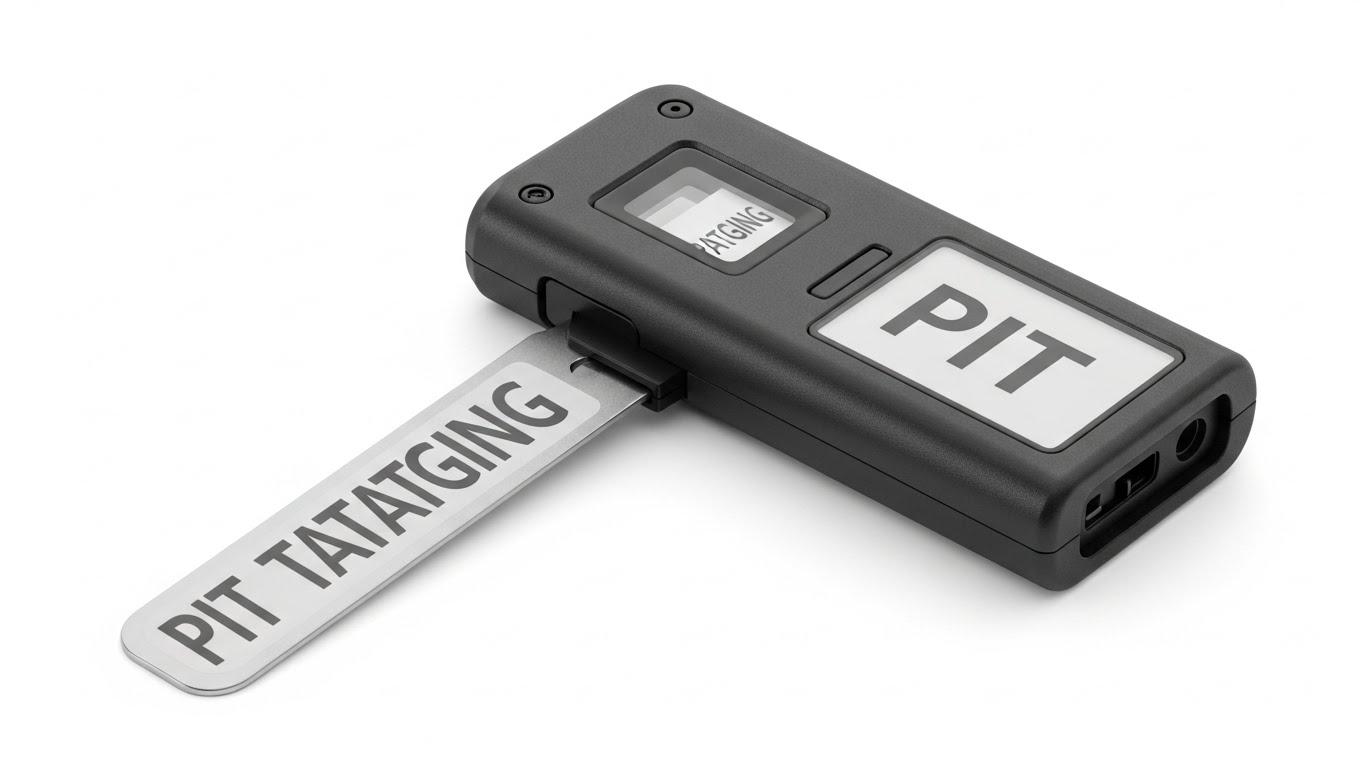
The landscape of aquatic research has undergone a remarkable transformation over the past three decades, driven largely by innovations in electronic monitoring technologies. Among these advancements, PIT tagging has emerged as a cornerstone methodology for tracking individual organisms across their lifespans, providing researchers with unprecedented insights into movement patterns, survival rates, and population dynamics. This passive identification technology, which relies on radio-frequency identification principles, has evolved from rudimentary systems with limited detection capabilities to sophisticated platforms that deliver exceptional data quality and reliability over extended temporal scales.
The Foundation of Reliable Long-Term Data Collection
Long-term ecological studies form the backbone of our understanding of aquatic ecosystems, yet historically, these research programs faced substantial challenges in maintaining consistent data collection across years and decades. Early tagging methods including external tags, fin clips, and visual markers suffered from high loss rates, observer variability, and degradation over time. These limitations compromised data integrity and made longitudinal analyses problematic.
The introduction of PIT tagging technology addressed many of these fundamental challenges. Unlike external markers that can be shed or become illegible, passive integrated transponder tags remain functional for the lifetime of most study organisms. Research conducted by the Columbia River Inter-Tribal Fish Commission documented tag retention rates exceeding 98% over 10-year periods in salmonid populations, a dramatic improvement over traditional marking techniques that often experienced 30-50% loss rates within a single year.
This exceptional retention creates continuity in datasets that was previously unattainable. Researchers can now track individual fish from juvenile stages through multiple spawning cycles, generating life-history data that reveals patterns invisible in shorter-term studies. The Snake River steelhead monitoring program, operating continuously since 1993, has utilized passive integrated transponder tagging to document generational shifts in migration timing, survival rates, and ocean distribution patterns that inform critical conservation decisions.
Technological Advancements Driving Detection Accuracy
The efficacy of any tagging system ultimately depends on the reliability of detection events. Early PIT tagging systems faced significant limitations in read range, requiring close proximity between tagged animals and detection equipment. This constraint restricted deployment scenarios and created substantial gaps in spatial and temporal coverage. Modern advancements in antenna design, signal processing algorithms, and transponder technology have dramatically expanded detection capabilities.
Contemporary detection systems can identify tagged individuals at distances exceeding one meter in optimal conditions, and multiplexing technologies allow single antenna arrays to monitor multiple channels simultaneously. These improvements have enabled the deployment of passive detection infrastructure at unprecedented scales. The Columbia River basin now hosts over 200 stationary detection sites that collectively generate millions of detection records annually, creating a comprehensive surveillance network for migrating salmonids.
Detection accuracy has similarly improved through refinements in error-checking protocols and data validation algorithms. Modern readers employ cyclic redundancy checks and multi-pass verification to virtually eliminate false positive detections that plagued earlier systems. A comparative analysis published in the North American Journal of Fisheries Management found that current-generation equipment achieved 99.7% accuracy in controlled conditions, compared to 94-96% accuracy for systems deployed in the early 2000s.
Miniaturization and Expanded Applications
The progressive miniaturization of PIT tagging technology has opened new frontiers in aquatic research by enabling studies of smaller species and younger life stages previously inaccessible to electronic tracking. The smallest commercially available tags now measure just 8mm in length and weigh under 0.1 grams, allowing researchers to safely tag juvenile fish as small as 50mm in total length while maintaining the same functionality and longevity as larger tags.
This expansion of the size spectrum has profound implications for population ecology research. Juvenile survival represents a critical demographic parameter for many species, yet it has historically been one of the most difficult to measure accurately. With appropriately sized tags, researchers can now quantify survival and movement from early life stages, identifying bottlenecks and critical habitats that drive recruitment variability.
Studies conducted by NOAA's Northwest Fisheries Science Center demonstrated that juvenile Chinook salmon tagged at 60mm fork length maintained normal growth trajectories and exhibited survival rates statistically indistinguishable from untagged cohorts monitored through mark-recapture techniques. These findings validated the use of passive integrated transponder tagging for sensitive early life-history studies and confirmed that the technology introduces minimal bias into demographic parameters.
Enhanced Data Resolution Through Multi-Site Detection Networks
The proliferation of automated detection infrastructure has transformed PIT tagging from a method primarily reliant on active recapture efforts into a system that passively accumulates vast quantities of spatiotemporal data. Regional detection networks now provide continuous monitoring coverage across entire watersheds, capturing fine-scale movement patterns and behavioral responses to environmental conditions.
The Sacramento-San Joaquin River Delta monitoring network exemplifies this approach, with 50+ detection stations positioned strategically throughout the complex waterway system. This infrastructure has revealed previously unknown migration routes, quantified how water management operations affect fish movements, and identified specific channel configurations that facilitate or impede juvenile outmigration. Research published in Ecological Applications demonstrated that detection network data improved migration survival estimates by reducing uncertainty by 40% compared to traditional mark-recapture approaches that relied on capture at only two locations.
Network data also enables sophisticated statistical analyses that extract maximum information from detection histories. Multi-state capture-recapture models, Cormack-Jolly-Seber frameworks, and Bayesian state-space models leverage the rich temporal structure of detection data to partition mortality across specific river reaches, estimate travel times with high precision, and test hypotheses about factors influencing survival and behavior. These analytical advances amplify the value of the underlying passive integrated transponder tagging infrastructure.
Integration with Environmental Monitoring Systems
Modern research programs increasingly recognize that understanding animal responses to environmental conditions requires simultaneous measurement of both biological and physical parameters. The integration of PIT tagging detection systems with environmental sensor networks creates powerful analytical opportunities by pairing individual movement and survival data with the specific conditions experienced by tagged organisms.
Many contemporary detection stations now incorporate real-time sensors measuring water temperature, dissolved oxygen, turbidity, flow velocity, and other relevant parameters. This co-location allows researchers to directly associate individual-level responses with environmental conditions, moving beyond population-level correlations to understand mechanistic relationships. A study of juvenile steelhead migration in the Columbia River utilized coupled detection and temperature data to demonstrate that individuals experiencing temperatures above 18°C exhibited 25% lower subsequent survival rates, providing actionable information for water management decisions.
Cloud-based data management systems facilitate the integration and visualization of these multi-source datasets. Researchers can query databases to extract detection histories for specific cohorts, overlay them with environmental time series, and rapidly test hypotheses about condition-dependent behavior and survival. This analytical agility accelerates the pace of scientific discovery and reduces the lag time between data collection and management application.
Advances in Tag Technology and Longevity
While the fundamental operating principles of PIT tagging have remained consistent since its inception, continuous refinements in materials science, electronics miniaturization, and manufacturing processes have yielded tags with improved performance characteristics. Modern tags feature biocompatible glass capsules that resist degradation in aquatic environments, copper antenna coils that maximize signal strength while minimizing size, and optimized circuitry that extends functional lifespan.
Laboratory accelerated aging tests conducted by tag manufacturers indicate that contemporary tags should maintain functionality for 20+ years under typical field conditions. This extended operational life is particularly valuable for long-lived species where multi-decadal monitoring programs are necessary to understand population dynamics. Studies of white sturgeon in the Columbia River system have successfully detected individuals originally tagged in the 1990s, demonstrating the real-world longevity of quality passive integrated transponder tagging systems.
Advancements in encoding capacity have also expanded the potential scale of tagging programs. ISO-compliant 134.2 kHz tags can generate over 274 billion unique identification codes, effectively eliminating concerns about code exhaustion even in programs that tag millions of individuals. This vast encoding space also supports data standardization efforts, with regional consortia allocating code ranges to specific agencies and projects to facilitate data sharing and coordination.
Quality Assurance Protocols and Data Validation
The value of long-term monitoring data depends critically on the implementation of rigorous quality assurance protocols that ensure data integrity across years, personnel changes, and equipment upgrades. Leading PIT tagging programs have developed comprehensive standard operating procedures covering tag implantation techniques, reader calibration schedules, antenna maintenance protocols, and data validation workflows.
Standardized training programs for field technicians minimize inter-operator variability in tag implantation procedures. Studies examining the influence of surgical technique on tag retention and fish survival found that personnel who completed formal certification programs achieved 2-3% higher retention rates than uncertified taggers. Many agencies now require annual recertification to maintain technical proficiency.
Automated data validation algorithms flag potentially erroneous records based on biological plausibility criteria. Detection records indicating impossible travel rates, violations of physical constraints, or inconsistencies with known life history patterns are automatically queued for manual review. These quality control procedures prevent spurious data from contaminating analytical datasets while maintaining the efficiency advantages of automated data collection.
Collaborative Networks and Data Sharing Frameworks
The regional scope of many aquatic populations necessitates coordination among multiple research entities, management agencies, and jurisdictions. Successful PIT tagging programs have embraced collaborative frameworks that standardize methodologies, share detection infrastructure, and maintain centralized data repositories accessible to authorized users. The Pacific States Marine Fisheries Commission operates the PIT Tag Information System (PTAGIS), a comprehensive database that aggregates tagging and detection records from dozens of contributing agencies across the Columbia River basin and beyond.
These collaborative structures multiply the research value of individual tagging efforts by enabling basin-wide analyses that would be impossible for any single agency to conduct independently. Researchers can track movements across jurisdictional boundaries, estimate survival through complex multi-path migration networks, and compare demographic rates among populations experiencing different management regimes. A meta-analysis utilizing PTAGIS data examined survival patterns across 15 salmon populations and identified habitat restoration actions that consistently yielded survival improvements, informing regional conservation strategies.
Data sharing frameworks also facilitate meta-analyses and synthetic studies that extract general principles from accumulated project-specific data. By aggregating information from multiple studies conducted under varying conditions, researchers can test the generality of findings, quantify effect sizes with greater precision, and develop predictive models applicable across broader spatial and temporal scales.
Future Directions and Emerging Technologies
The trajectory of passive integrated transponder tagging innovation continues upward, with several emerging technologies poised to further enhance data accuracy and expand monitoring capabilities. Researchers are developing tags with integrated sensors that record environmental parameters experienced by individual animals, creating individual-scale environmental exposure histories. Prototype temperature-logging tags have successfully recorded thermal experiences of migrating salmon, revealing that individuals following different migration routes experience markedly different thermal regimes with corresponding impacts on survival.
Improvements in detection technology are also ongoing, with researchers testing high-frequency systems that offer increased read ranges and faster data transmission rates. These next-generation readers may enable mobile detection platforms mounted on autonomous underwater vehicles or surface drones, providing flexible monitoring coverage in areas where fixed infrastructure is impractical.
The integration of PIT tagging data with genetic information represents another promising frontier. By genotyping tagged individuals, researchers can link phenotypic data on movement, survival, and life history with genotypic variation, enabling quantitative genetic studies of ecologically relevant traits. These integrated datasets support both basic evolutionary research and applied conservation genetics programs focused on maintaining adaptive potential in managed populations.
Conclusion
The evolution of PIT tagging technology has fundamentally transformed the practice of aquatic research and monitoring, enabling data collection with accuracy, spatial resolution, and temporal continuity that were unimaginable just decades ago. Through miniaturization, improved detection systems, networked infrastructure, and collaborative data frameworks, modern passive integrated transponder tagging programs generate insights into population dynamics, movement ecology, and habitat relationships that directly inform conservation strategies and management decisions. As the technology continues to advance and analytical methods become increasingly sophisticated, passive integrated transponder tagging will remain an indispensable tool for understanding and protecting aquatic biodiversity in an era of rapid environmental change. The accumulated knowledge from long-term monitoring programs powered by this technology represents an irreplaceable foundation for adaptive management and evidence-based conservation in freshwater and marine ecosystems worldwide.

 English
 Arabic
 French
 Portuguese
 Deutsch
 Turkish
 Dutch
Dutch
 Italiano
 Russian
 Romaian
 Portuguese (Brazil)
 Greek
Greek