
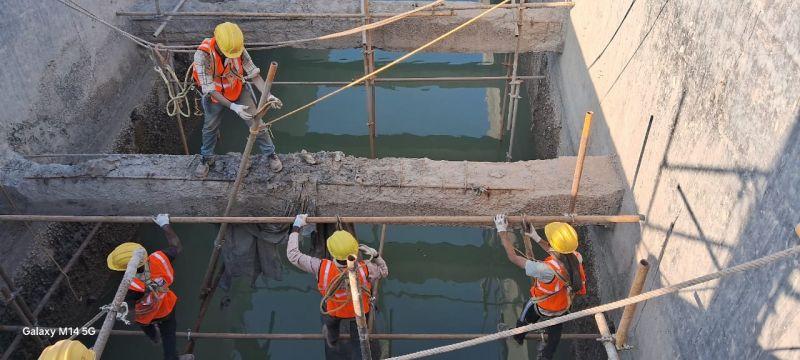
Many buildings begin to show signs of wear as they age. Cracks, weakened concrete and reduced load capacity often appear due to corrosion, moisture and poor maintenance. These issues raise concerns about long-term safety. When structural members lose their strength, repair methods become essential to restore stability. Techniques like column strengthening, structural rehabilitation and concrete jacketing help maintain safety without replacing entire sections of the building.
What Concrete Jacketing Means
Concrete jacketing is a strengthening technique used to repair and improve the capacity of existing RCC members. It involves adding a new layer of concrete and reinforcement around the old column or beam to increase its size and strength. This method improves load-bearing performance and extends the lifespan of the structure. It is widely preferred because it provides dependable results and enhances stability in both residential and commercial buildings.
Where Concrete Jacketing Works Best
This method is suitable for columns, beams and other vertical and horizontal members that show reduced strength. When buildings undergo renovations, additional floors or heavier loads, concrete jacketing helps meet new structural demands. It also works well when sections of the structure develop cracks, corrosion or spalling. The method improves both compression and shear capacity, making it ideal for buildings that need reliable strengthening.
Why Concrete Jacketing Is a Reliable Technique
One strong advantage of concrete jacketing is that it restores strength without major demolition. Increasing the cross-sectional size of a member helps distribute loads more effectively. The method also enhances ductility, reduces stiffness-related failures and supports better performance during earthquakes. Since the new concrete bonds with the old surface, the structure gains improved durability and resistance to future deterioration.
How Concrete Jacketing Enhances Structural Members
The process begins with surface preparation, which helps the new layer bond properly. Steel reinforcement is then added to increase strength, followed by formwork and fresh concrete. When the section becomes larger and more reinforced, it carries greater loads and withstands stress better. Concrete jacketing improves fire resistance, durability and long-term stability, making it a comprehensive solution for damaged or under-designed RCC members.
When Concrete Jacketing Should Be Considered
This strengthening technique becomes necessary when structural components lose their original capacity or show visible signs of distress. Conditions like peeling concrete, rusted steel, widening cracks and uneven settlement indicate that repairs are needed. Concrete jacketing is also recommended when the structure must handle increased loads due to new machinery, extensions or occupancy changes. Early strengthening helps prevent severe damage and supports long-term safety.
Concrete Jacketing for Columns
Columns are the backbone of any building, so they require strong reinforcement when weakened. Concrete jacketing increases column size and improves both axial and shear strength. It is especially useful in older buildings where columns were originally designed for lower loads. By adding new concrete and reinforcement, the column becomes more stable and capable of supporting increased pressure, making it suitable for long-term structural performance.
Concrete Jacketing for Beams
Beams often suffer from sagging, cracking and loss of stiffness. Concrete jacketing strengthens beams by adding an outer concrete layer and new reinforcement. This increases the beam’s capacity to resist shear and bending forces. It also helps control deflection, especially in buildings with heavy loads or extended spans. By restoring stiffness and stability, the technique ensures safer and more durable structural behavior.
Concrete Jacketing in Industrial Buildings
Factories, warehouses and industrial plants require strong structural performance due to heavy equipment and continuous operations. Concrete jacketing works well for such environments because it reinforces stressed members, improves impact resistance and increases load capacity. Industrial structures often face corrosion, vibration and chemical exposure, which accelerate deterioration. Jacketing helps upgrade these members without shutting down operations for long periods.
Advantages of Concrete Jacketing
One of the biggest advantages of concrete jacketing is its ability to significantly increase load capacity. It also enhances durability, fire resistance and overall stiffness. The method works for a wide range of structures, from small residential buildings to large industrial facilities. It solves issues caused by aging, environmental exposure and structural changes. Since the existing member stays in place, the repair remains economical and efficient.
Comparing Jacketing with Other Strengthening Methods
There are several strengthening methods available, such as steel plate bonding, FRP wrapping and micro-concrete repair. However, concrete jacketing remains a strong choice when the structure has substantial damage or needs major load enhancement. While FRP is more suitable for lightweight upgrades and steel plating works for limited areas, jacketing offers a more robust solution by increasing size, reinforcement and stability.
Step-by-Step Process of Concrete Jacketing
The procedure includes surface cleaning, roughening, installing dowel bars, fixing reinforcement, setting formwork and placing concrete. Each step needs careful attention to ensure proper bonding and strength. Skilled professionals follow strict guidelines to achieve the right thickness and coverage. When executed correctly, concrete jacketing restores structural capacity and prevents further deterioration, making it an effective repair method.
Role of Structural Engineers
Structural strengthening requires detailed analysis, and an engineer plays a major role throughout the process. Engineers inspect damage levels, calculate load requirements and design the jacketing layout. Their guidance ensures that the repair aligns with safety rules and structural needs. Skilled supervision guarantees that concrete jacketing is carried out properly, reducing the risk of future issues.
Suitability for Indian Building Conditions
Indian buildings often face challenges like high humidity, corrosion, heavy loads and inconsistent maintenance. Concrete jacketing is suitable for these conditions because it strengthens weak sections and enhances durability. It is frequently used in old residential buildings, commercial complexes and industrial structures. The method provides strong reinforcement and helps extend the life of buildings exposed to varied environmental stresses.
Concrete jacketing stands out as a dependable method for repairing and strengthening RCC members. Whether used for columns, beams or industrial structures, it offers durable performance and long-term safety. By improving load capacity, stability and resistance, it supports the structural health of aging and damaged buildings. When planned and executed by experienced professionals, jacketing ensures that structures remain safe, stable and functional for many years.

 English
 Arabic
 French
 Spanish
 Portuguese
 Deutsch
 Turkish
 Dutch
Dutch
 Italiano
 Romaian
 Portuguese (Brazil)
 Greek
Greek