
Most of us are pretty good about the obvious stuff. Oil changes, tire rotations, the occasional car wash when things get genuinely embarrassing. But there's one small maintenance task that almost every driver skips not out of laziness, but simply because nobody ever told them it existed.
We're talking about the cabin air filter. And if you've never replaced yours, there's a decent chance it's been quietly degrading for the past two or three years, making every drive slightly worse without you realizing it.
What it actually does
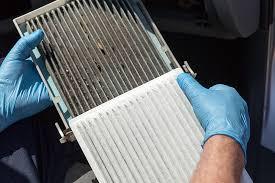
Your car pulls in outside air every time you run the fan, heat, or AC. Before that air reaches the passenger cabin, it passes through a small pleated filter tucked behind your glove box. That filter catches dust, pollen, mold spores, exhaust particles, and road debris the kind of stuff you really don't want circulating around you for an hour-long commute.
When the filter is clean, you don't notice it. When it's clogged, you notice everything: weaker airflow, musty smells, more dust on your dashboard, allergy symptoms that seem worse in the car than anywhere else. These things creep up so gradually that most drivers just assume their AC is getting old.
It's usually not the AC. It's a $20 filter that hasn't been replaced in three years.
How often should you replace it?
The standard recommendation is every 12,000 to 15,000 miles, or roughly once a year. But that's for average conditions. If you drive in a city with heavy traffic, live somewhere with high pollen counts, or spend any time on dusty roads, you'll likely need to replace it more frequently closer to every 8 to 10 months.
The easiest habit: check it every time you get an oil change. Most shops will pull it out and show you for free. If it looks dark and packed with debris, replace it on the spot. If it still looks clean, put it back and check again in a few months.
Signs yours needs replacing right now
You don't always need to wait for the mileage to tell you. These are the clearest signals:
- Airflow from your vents feels noticeably weaker, even at maximum fan speed
- A musty or stale smell appears whenever you turn on the HVAC
- Dust builds up on your dashboard faster than it used to
- You're sneezing or experiencing more eye irritation specifically during drives
- Your windows fog up quickly and take longer to clear
- The fan sounds louder or more strained than normal
Any one of these on its own might be coincidence. Two or more together, and your filter is almost certainly the culprit.
Can you do it yourself?
Yes — and this is the part most people don't realize. Replacing a cabin air filter is one of the easiest DIY car maintenance tasks there is. No tools required for most vehicles. No mechanical experience needed. The whole job takes about 15 minutes, and the filter itself costs between $15 and $50 depending on the type you choose.
For most vehicles, you simply drop the glove box down, unclip a small housing behind it, slide out the old filter, and slide the new one in with the airflow arrow pointing the right direction. That's the entire process.
If you'd rather have a complete walkthrough including filter types, cost breakdowns, and step-by-step photos for common vehicle models this cabin air filter guide covers everything in detail.
What does a shop charge if you'd rather not DIY?
If you prefer to have it done professionally, most independent shops charge between $45 and $90 for the full service. Dealerships tend to run $60 to $120. The filter itself only costs $15 to $50 the rest is labor, and given how quick the job is, the markup is significant. It's one of the few maintenance tasks where doing it yourself genuinely makes financial sense even if you're not particularly handy.
Which filter type should you buy?
There are three main options. A basic particulate filter ($10–$25) handles dust and pollen suitable for most drivers in moderate conditions. An activated carbon filter ($25–$45) adds an odor-absorbing layer, which makes a meaningful difference if you drive in heavy urban traffic. A HEPA-grade filter ($40–$65) offers the highest filtration efficiency and is worth considering if you have allergies or respiratory sensitivities.
For most everyday drivers, the activated carbon option is the sweet spot noticeably better than a basic filter without jumping to premium pricing.
The bigger picture
Here's what makes this particular maintenance task worth caring about: it directly affects your daily quality of life in a way that an oil change or brake inspection simply doesn't. You spend real time inside your car. The air quality, the comfort, the smell these things matter on a commute-by-commute basis.
A $25 filter replaced once a year also protects your blower motor from wearing out prematurely a repair that costs anywhere from $200 to $600+ depending on the vehicle. Preventive maintenance at this scale is almost always the better financial decision.
Add it to your annual checklist. Check it at your next oil change. And if it's been more than a year since you've thought about it or if you've genuinely never replaced it there's a reasonable chance your car will feel measurably better within 20 minutes of taking care of it.
That's a pretty good return on a Tuesday afternoon.

 English
 Arabic
 French
 Spanish
 Portuguese
 Deutsch
 Turkish
 Dutch
Dutch
 Italiano
 Russian
 Portuguese (Brazil)
 Greek
Greek