
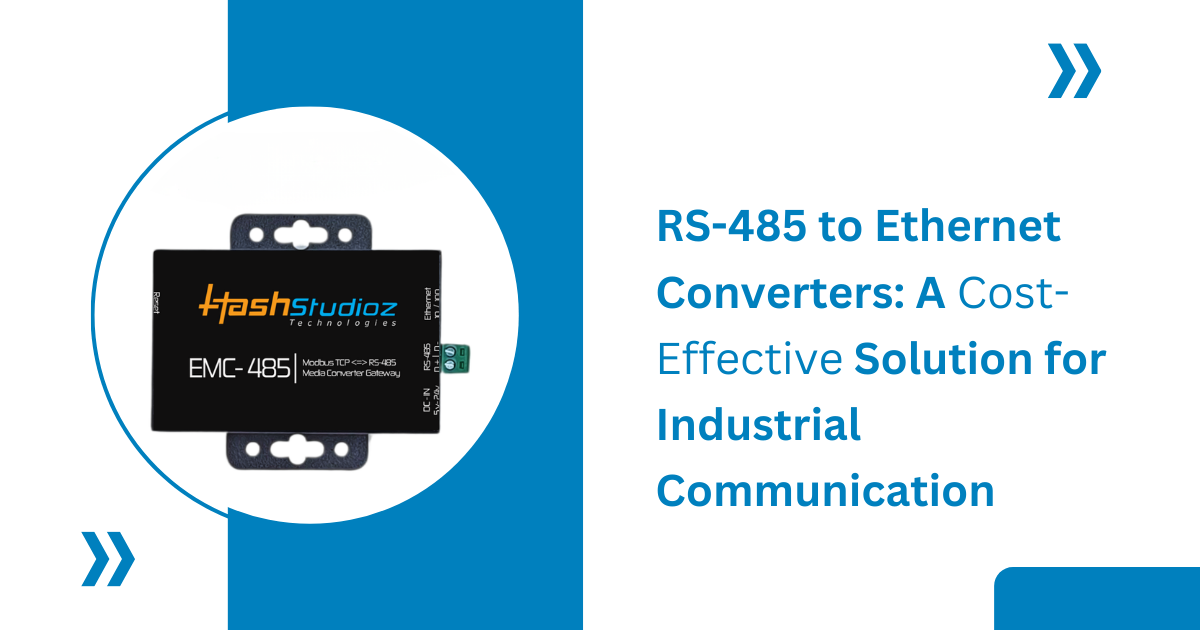
In modern industrial environments, communication plays a pivotal role in ensuring smooth operations, efficient monitoring, and real-time data exchange. For many years, RS-485 has been a reliable communication protocol in industries such as manufacturing, energy, and automation. However, with the rise of Ethernet-based networking systems, the need to bridge the gap between RS-485 and Ethernet technologies has become essential. This is where RS-485 to Ethernet converters, or RS-485 to LAN converters, come into play.
These devices offer a cost-effective solution for industries that rely on legacy RS-485 devices but need to integrate them into newer Ethernet networks. This article explores the importance of RS-485 to Ethernet converters, their benefits, use cases, and key features, along with how they address industrial communication challenges.
Understanding RS-485 and Ethernet Communication
Before delving into the specifics of RS-485 to Ethernet converter, it’s important to understand the underlying technologies.
1. RS-485: The Industrial Communication Standard
RS-485, also known as EIA-485, is a differential signal standard used primarily in industrial automation and control systems. Its robustness, ability to cover long distances, and resistance to electrical noise make it ideal for environments with high electromagnetic interference (EMI). Key features include:
- Differential Signal: RS-485 uses a differential signal, meaning it compares the voltages between two wires, providing higher noise immunity.
- Long Distance: RS-485 allows communication over long distances—up to 4000 feet (1200 meters)—making it suitable for large industrial setups.
- Multipoint Communication: RS-485 supports multiple devices (up to 32) on a single bus, allowing for versatile system configurations.
RS-485 is typically used in Modbus, Profibus, and BACnet protocols, among others, for communication between sensors, controllers, and monitoring systems.
2. Ethernet: The Backbone of Modern Networking
Ethernet, on the other hand, is a widely adopted networking protocol in both industrial and commercial settings. It allows for high-speed data transfer, scalability, and global connectivity. Key characteristics of Ethernet include:
- High Data Transfer Speeds: Ethernet offers speeds ranging from 10 Mbps to 100 Gbps, depending on the type of Ethernet standard used.
- Ease of Integration: Ethernet provides a standardized networking solution with widely available infrastructure, including routers, switches, and cables.
- TCP/IP Communication: Ethernet uses the TCP/IP stack, which is the foundation of internet communication, enabling remote access and cloud-based systems.
Ethernet is preferred for its ability to connect devices across larger geographical areas, integration with IT infrastructure, and compatibility with modern communication protocols.
The Need for RS-485 to Ethernet Converters
In many industries, legacy systems still operate on RS-485 communication, but modern infrastructure is built around Ethernet technology. This creates a need for a solution that allows RS-485 devices to communicate with Ethernet-based systems.
1. Bridging Legacy Systems and Modern Networks
Many industrial environments still rely on RS-485 devices for monitoring and control due to the stability and reliability of the protocol. However, Ethernet-based systems offer significant advantages in terms of speed, ease of use, and integration with modern IT systems. RS-485 to Ethernet converters act as a bridge between these two protocols, enabling seamless data exchange.
Without an RS-485 to Ethernet converter, companies would need to replace all legacy RS-485 devices with Ethernet-based devices, which could be prohibitively expensive. The converter offers a more economical alternative, allowing businesses to retain their existing equipment while upgrading their network infrastructure.
2. Remote Monitoring and Control
Ethernet enables remote monitoring and control over vast distances, which is crucial for industries with geographically dispersed assets. RS-485 devices, being typically confined to local areas, lack this capability. By connecting RS-485 devices to an Ethernet network through an RS-485 to LAN converter, businesses can remotely monitor and control devices, improving operational efficiency and reducing the need for on-site personnel.
3. Improved Data Sharing and Integration
Ethernet allows for easy integration with other systems, including enterprise resource planning (ERP) systems, cloud platforms, and industrial control systems (ICS). RS-485 networks, however, are usually isolated from these advanced systems. Using an RS-485 to Ethernet converter, industrial organizations can facilitate data sharing between legacy equipment and modern systems, improving decision-making and enabling real-time analytics.
Benefits of RS-485 to Ethernet Converters
RS-485 to Ethernet converters provide a range of benefits that make them an attractive solution for industrial communication.
1. Cost-Effective Solution
One of the primary reasons to use an RS-485 to Ethernet converter is its cost-effectiveness. Replacing legacy RS-485 devices with Ethernet-capable counterparts can be an expensive and time-consuming process. The converter allows businesses to extend the life of their existing RS-485 devices, reducing the need for costly upgrades.
2. Seamless Integration
An RS-485 to LAN converter enables seamless integration of legacy systems with modern Ethernet-based infrastructure. The device typically supports both serial-to-Ethernet and Ethernet-to-serial conversion, ensuring smooth communication between devices operating on different protocols.
3. Remote Access and Control
With Ethernet connectivity, RS-485 devices can be accessed remotely. This is particularly useful for industrial environments where monitoring and control from a centralized location are critical. Remote access also enables predictive maintenance, reducing downtime and extending the life of equipment.
4. Increased Network Flexibility
Ethernet networks are highly scalable, and integrating RS-485 devices into such a network increases flexibility. Businesses can easily add new devices or expand their network without overhauling the entire communication infrastructure.
5. Improved Data Security
Ethernet networks offer enhanced security features, including encryption, authentication, and firewall protections. By connecting RS-485 devices through an Ethernet network, businesses can take advantage of these security measures to protect sensitive industrial data.
6. Simplified Maintenance and Troubleshooting
Ethernet-based systems allow for easier diagnostics and troubleshooting compared to RS-485 networks. With the integration of RS-485 devices into an Ethernet network, maintenance becomes simpler, and system performance can be continuously monitored.
Key Features to Consider When Choosing an RS-485 to Ethernet Converter
Selecting the right RS-485 to Ethernet converter is crucial to ensure that the system meets your industrial communication needs. Some important features to consider include:
1. Protocol Support
The converter should support the communication protocols used by your RS-485 devices. Common industrial protocols such as Modbus RTU, Modbus TCP, and BACnet IP should be supported to ensure compatibility.
2. Data Transfer Speed
Different industrial applications require different data transfer speeds. The converter should support the appropriate speed for your RS-485 devices to ensure smooth communication without delays.
3. Number of RS-485 Ports
Depending on the number of RS-485 devices in your network, the converter may need multiple ports. Some converters offer multiple serial ports, while others may be designed for single-port use.
4. Industrial-grade Durability
Since RS-485 communication is often used in harsh industrial environments, it’s essential that the converter is durable and designed to withstand extreme temperatures, humidity, and vibrations.
5. Redundancy and Reliability
For critical systems, choosing a converter with redundancy features such as dual Ethernet ports or backup power options ensures continued operation even in case of a failure.
6. Ease of Configuration
Look for a converter with user-friendly configuration options, such as web-based interfaces or configuration software. Easy setup and management can save time during installation and troubleshooting.
Use Cases for RS-485 to Ethernet Converters
RS-485 to Ethernet converters are used across various industries for different applications. Below are some examples of how they are applied in real-world scenarios:
1. Industrial Automation
In industrial automation, multiple devices such as PLCs, sensors, and actuators often use RS-485 for communication. By connecting these devices to an Ethernet network, manufacturers can remotely monitor and control operations, track data in real time, and integrate their systems with higher-level control systems like SCADA (Supervisory Control and Data Acquisition).
2. Energy Management Systems
Energy management systems often rely on RS-485 for communication between smart meters, controllers, and other devices. Using an RS-485 to LAN converter allows energy operators to gather real-time data, monitor energy consumption patterns, and make adjustments remotely.
3. Building Management Systems (BMS)
In building management, devices like HVAC (heating, ventilation, and air conditioning), lighting controls, and access systems often use RS-485 for communication. The integration of these systems into an Ethernet network allows facility managers to control building systems remotely, improving efficiency and reducing energy costs.
4. Oil and Gas Industry
In the oil and gas industry, remote monitoring and control are essential. RS-485 devices in hazardous environments can be connected to Ethernet networks using a converter, allowing operators to monitor operations from central control rooms or remote locations.
Conclusion
RS-485 to Ethernet converters are an essential component for industries that want to modernize their communication infrastructure without discarding valuable legacy equipment. These devices offer a low-cost, efficient solution for connecting RS-485 networks to Ethernet systems, enabling remote monitoring, improved data sharing, and easier integration with modern IT networks. As industrial communication needs continue to evolve, RS-485 to Ethernet converters provide the flexibility and reliability required to meet the demands of today’s connected world.
By selecting the right converter, businesses can extend the life of their existing RS-485 devices, enhance their network infrastructure, and position themselves for future growth in the ever-evolving industrial landscape.

 Arabic
 French
 Spanish
 Portuguese
 Deutsch
 Turkish
 Dutch
Dutch
 Italiano
 Russian
 Romaian
 Portuguese (Brazil)
 Greek
Greek