
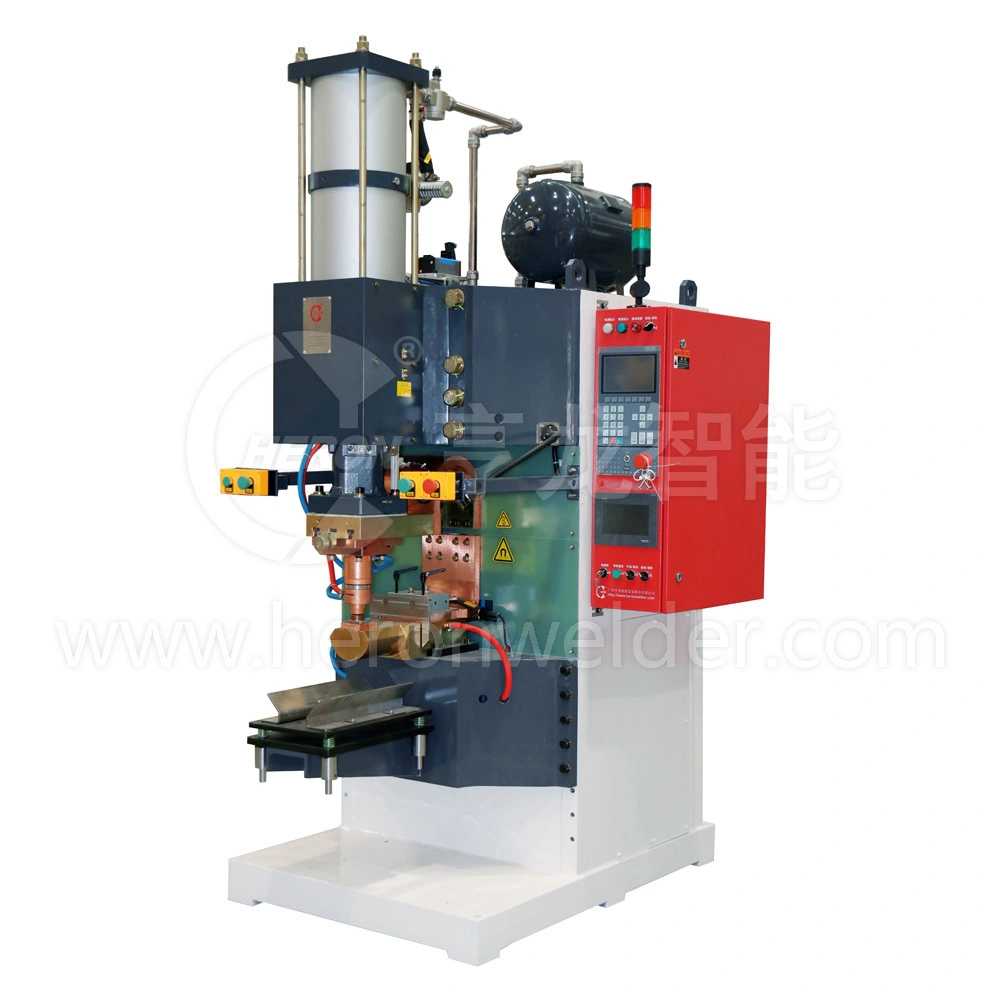
In today’s competitive manufacturing landscape, choosing the right welding technology can be the difference between high-quality production and costly rework. A Heron welder represents a class of advanced industrial welding and metal-joining equipment engineered for reliability, repeatability, and integration into automated production environments. Whether you're an OEM, automation integrator, or factory decision-maker, Heron’s breadth of solutions—from resistance welding to self-pierce riveting—offers performance, uptime, and ROI that modern manufacturing demands.
What Is a Heron Welder?
A Heron welder refers to any of the cutting-edge welding systems and related automation products designed and manufactured by Heron Welder, a global leader in industrial welding and metal joining. Heron’s portfolio includes:
-
Resistance welding machines (spot, projection, seam)
-
MFDC and capacitor discharge welding systems
-
Clinching and self-pierce riveting (FSPR) solutions
-
Welding guns and electrodes
-
Advanced controllers and welding power supplies
-
Automated production lines and integration systems
Each system is engineered to deliver consistent weld quality, reduce cycle times, and integrate seamlessly with factory automation systems.
Core Welding Technologies from Heron
Resistance Welding: Spot, Projection & Seam
Resistance welding is one of the most widely used welding methods in high-volume manufacturing. Heron welders generate heat by passing a controlled current through the workpieces and applying force via electrodes.
-
Spot welding excels in joining sheet metal in automotive body assembly and appliance panels.
-
Projection welding uses embossed features to localize heat, ideal for joining fasteners or complex assemblies.
-
Seam welding produces continuous welds for leak-proof joints—common in fuel tanks and HVAC ducts.
Heron’s machines combine robust power supplies with precision controls, ensuring repeatable weld energy, force profiling, and minimized electrode wear.
MFDC Welding: Precise Control for Thin Materials
Mid-Frequency Direct Current (MFDC) welding systems offer tighter control of current and heat compared to traditional mains-frequency units. This precision makes MFDC welders particularly suited for:
-
High-strength steel and aluminum
-
Thin-gauge materials
-
Mixed-material joints
Heron’s MFDC platforms deliver high peak power with rapid response, ensuring strong welds with minimal distortion—critical for lightweighting strategies in automotive and aerospace applications.
Capacitor Discharge Welding: Speed and Accuracy
Capacitor discharge (CD) welding stores energy and releases it in microseconds, creating welds with minimal heat affected zones. This makes CD systems ideal for:
-
Battery tab welding
-
Connector joining
-
Electronic assemblies
Heron’s CD welders combine precise timing with adjustable energy settings, enabling manufacturing engineers to optimize weld profiles for sensitive and high-throughput applications.
Clinching & Self-Pierce Riveting (FSPR)
Not all metal-joining needs a traditional weld. Mechanical joining—such as clinching and self-pierce riveting (FSPR)—provides high-strength joins without consumables.
-
Clinching forms a mechanical interlock by plastically deforming overlapping sheets.
-
FSPR inserts a rivet through materials without pre-drilling, creating consistent, high-integrity joints.
Heron’s integrated clinching and FSPR systems deliver repeatability and cycle times suitable for automotive closures, electronics enclosures, and multi-material assemblies.
Intelligent Control & Integration
A Heron welder isn’t just a power supply with electrodes—it’s part of a connected manufacturing ecosystem. Intelligent controllers enable:
-
Real-time process monitoring
-
Data logging for traceability
-
Adaptive force and current control
-
PLC and factory-network integration (Ethernet/IP, Profinet, etc.)
These features ensure manufacturing engineers have visibility into every weld cycle and can respond proactively to process variations.
Applications Across Industries
Heron welders are deployed across a wide range of sectors, each with unique metal joining challenges:
Automotive & EV Manufacturing
From body-in-white assembly to battery module fabrication, Heron’s resistance welders and MFDC platforms help optimize strength, reduce cycle times, and support mixed-material joining strategies.
Appliance & White Goods
High-speed seam welders and projection welders ensure durable, aesthetic joins in appliances where leak-proofing and structural performance are essential.
Electronics & Batteries
CD welders and precision resistance systems handle sensitive components and battery interconnects with repeatable quality and minimal heat impact.
Heavy Machinery & Industrial Fabrication
High-force spot welders and automated welding cells support structural metal fabrication for construction equipment, agricultural machinery, and industrial enclosures.
Comparing Heron Technologies: When to Use What
| Welding Method | Best For | Key Benefits |
|---|---|---|
| Resistance Spot Welding | Sheet metal joins | Fast cycle times, robust joint strength |
| Projection Welding | Fasteners & multi-spot joins | Localized heat, reduced electrode wear |
| Seam Welding | Continuous joints | Leak-proof welds, consistent seam quality |
| MFDC Welding | Thin & high-strength materials | Precise heat control, less distortion |
| Capacitor Discharge Welding | Electronics & tabs | Ultra-fast energy release, minimal HAZ |
| Clinching / FSPR | Mechanical joining | No consumables, multi-material joining |
Choosing the right welding technology depends on materials, geometry, production rates, and quality targets. Heron’s technical team can help you assess the ideal solution for your application.
Best Practices for Maximizing Weld Quality
To get the most out of a Heron welder, manufacturing teams should:
-
Define clear welding specifications – material types, thickness, joint design, and quality standards.
-
Calibrate and condition electrodes regularly to maintain consistent contact resistance.
-
Use process monitoring and data logging for SPC (Statistical Process Control).
-
Integrate guards and safety interlocks to protect operators and equipment.
-
Align automation logic with welding cycle timing to avoid bottlenecks.
These practices improve uptime, yield, and traceability—key metrics for high-performance manufacturing.
FAQs About Heron Welder
1. What materials can a Heron welder join?
Heron welders can join a wide range of metals, from mild steel and stainless steel to aluminum and mixed materials, depending on the welding technology selected.
2. How does MFDC welding differ from traditional resistance welding?
MFDC systems provide tighter control of current and heat, making them ideal for thin or high-strength materials where precision and minimal distortion are critical.
3. Can Heron systems be integrated into automated production lines?
Yes—Heron welders are designed for seamless integration via common industrial networks and controllers, supporting high-volume automated manufacturing.
4. What industries benefit most from Heron welding solutions?
Automotive, EV battery production, electronics, appliances, heavy machinery, aerospace components, and general industrial fabrication are key sectors.
5. How do I choose the right Heron welding technology?
Selection depends on your materials, joint types, production volumes, and quality goals. Heron’s applications engineers can assess your process and recommend the ideal system.
Conclusion: Why Choose a Heron Welder?
A Heron welder delivers more than power—it's engineered for precision, durability, and integration in the demanding world of industrial manufacturing. With a broad spectrum of welding technologies and automation capabilities, Heron empowers OEMs, automation integrators, and factory engineers to meet production targets while maintaining quality and traceability.
Ready to optimize your welding processes?
Contact Heron Welder today to request a quote or consult with our expert engineers on customized welding and automation solutions tailored to your manufacturing needs.

 Arabic
 French
 Spanish
 Portuguese
 Deutsch
 Turkish
 Dutch
Dutch
 Italiano
 Russian
 Romaian
 Portuguese (Brazil)
 Greek
Greek